Supreme Court Decisions: 5 Landmark Rulings Expected by June 2026
Advertisements
Five pivotal Supreme Court Decisions are anticipated by June 2026, holding the potential to significantly alter the landscape of US law. This report provides an in-depth look at these cases, examining their implications for various aspects of American society and legal precedent.
Supreme Court Decisions: 5 Landmark Rulings Expected by June 2026 That Could Reshape US Law is shaping today’s agenda with new details released by officials and industry sources. This update prioritizes what changed, why it matters and what to watch next, in a straightforward news format.
Anticipating Key Supreme Court Decisions by June 2026
The Supreme Court of the United States stands as the final arbiter of law, and its upcoming term promises a series of decisions that could profoundly impact American society. Legal experts and civil rights advocates are closely monitoring several cases, predicting that at least five landmark rulings will emerge by June 2026.
These anticipated Supreme Court Decisions span a wide array of critical issues, from fundamental constitutional rights to the regulatory powers of federal agencies. The outcomes could redefine established legal precedents and introduce new frameworks for interpreting the nation’s foundational documents.
Understanding the potential ramifications of these cases is crucial for citizens, legal professionals, and policymakers alike. The Court’s pronouncements often have far-reaching consequences, shaping daily life and the future trajectory of American jurisprudence.
The Shifting Landscape of Federal Power
One of the most closely watched areas involves challenges to the administrative state and the power of federal agencies. Several cases question the scope of regulatory authority, particularly concerning environmental protection and economic oversight.
These Supreme Court Decisions could significantly curtail the ability of agencies to implement policies, potentially shifting more power to Congress or individual states. The implications for climate change initiatives, public health regulations, and consumer protections are substantial.
The Court’s conservative majority has shown a willingness to re-examine established doctrines, signaling a potential rollback of decades-old interpretations of federal administrative power. This could lead to a less centralized approach to national challenges.
Chevron Deference and Agency Authority
A central doctrine under scrutiny is the Chevron deference, which instructs courts to defer to federal agencies’ reasonable interpretations of ambiguous statutes. Its potential overturning could dramatically alter how regulations are challenged and enforced.
Should the Court weaken or eliminate Chevron deference, agencies would face increased judicial oversight, making it harder to adapt to new challenges without explicit congressional action. This shift could lead to more frequent litigation against federal regulations.
- Potential for increased legal challenges to agency rules.
- Greater need for explicit congressional directives in legislation.
- Shift in power dynamics between the judiciary and the executive branch.
Environmental Regulations Under Review
Cases challenging the Environmental Protection Agency’s (EPA) authority are also on the docket, with potential implications for clean air and water standards. These Supreme Court Decisions could limit the EPA’s ability to address pollution and climate change effectively.
Environmental groups express concern that a restrictive ruling could hamstring efforts to combat environmental degradation and protect natural resources. Industries, on the other hand, might welcome reduced regulatory burdens.
The outcomes will determine the balance between economic development and environmental stewardship, setting new precedents for how federal law applies to ecological issues across the nation.
Individual Rights and Liberties at Stake
Beyond federal power, the Court is expected to tackle cases concerning fundamental individual rights, including free speech, religious freedom, and voting rights. These areas consistently generate intense public interest and legal debate.
The upcoming Supreme Court Decisions in these domains could redefine the boundaries of personal freedoms and government intervention. Each ruling carries the weight of potentially altering everyday life for millions of Americans.
Activists and legal scholars are preparing for a series of judgments that could either expand or contract the protections afforded to individuals under the Constitution. The ideological composition of the Court will play a significant role in these outcomes.

Free Speech in the Digital Age
Cases involving free speech are evolving rapidly with the advent of digital platforms and social media. The Court may address questions of content moderation, online harassment, and the limits of expression in a connected world.
These Supreme Court Decisions will have profound implications for tech companies, individual users, and the future of public discourse. Balancing free expression with the need to prevent harm online remains a complex challenge.
The rulings could establish new standards for what constitutes protected speech versus harmful content, potentially impacting everything from political campaigning to personal interactions on social media platforms.
Religious Freedom and Public Accommodations
Another area of focus involves conflicts between religious freedom and anti-discrimination laws, particularly in the context of public accommodations. These cases often involve deeply held beliefs clashing with evolving societal norms.
The Court’s past rulings have sought to navigate this delicate balance, and new Supreme Court Decisions are anticipated to further refine these legal principles. The outcomes could affect businesses, religious organizations, and LGBTQ+ individuals.
The tension between individual religious exercise and the rights of others to be free from discrimination continues to be a contentious issue. The Court’s approach will define the scope of religious exemptions in various public spheres.
Voting Rights and Electoral Integrity
The integrity of the electoral process is a perennial concern, and the Supreme Court frequently hears cases related to voting rights, redistricting, and election administration. These rulings shape the democratic landscape of the nation.
Upcoming Supreme Court Decisions could impact voter access, the fairness of electoral maps, and the overall conduct of elections. The balance between state control over elections and federal protections for voters remains a critical point of contention.
Advocacy groups are particularly vigilant, as rulings in this area can have direct consequences for political representation and the ability of citizens to exercise their franchise effectively. The future of American democracy hinges on these decisions.
Gerrymandering and Fair Representation
Challenges to partisan gerrymandering continue to reach the Court, despite previous rulings that largely left such issues to state courts. New legal theories or factual circumstances could prompt the Court to revisit its stance.
These Supreme Court Decisions on redistricting could either empower or disempower state legislatures in drawing electoral boundaries, with significant impacts on the partisan composition of Congress and state houses.
The pursuit of fair and equitable representation is central to these cases, as highly gerrymandered districts can dilute the voting power of certain populations and entrench political incumbents.
- Potential for new legal tests for gerrymandering claims.
- Impact on the balance of power in legislative bodies.
- Renewed focus on state-level legal challenges to district maps.
Voter ID Laws and Access
The Court may also address cases concerning voter identification laws and other regulations affecting voter access. These laws are often debated in terms of preventing fraud versus suppressing turnout.
Upcoming Supreme Court Decisions could clarify the constitutional limits on states’ abilities to impose voting requirements. The outcomes will influence who can vote and how easily they can do so.
The debate surrounding voter ID laws touches upon fundamental questions of democratic participation and the role of government in regulating elections. These rulings will have a direct impact on millions of eligible voters.
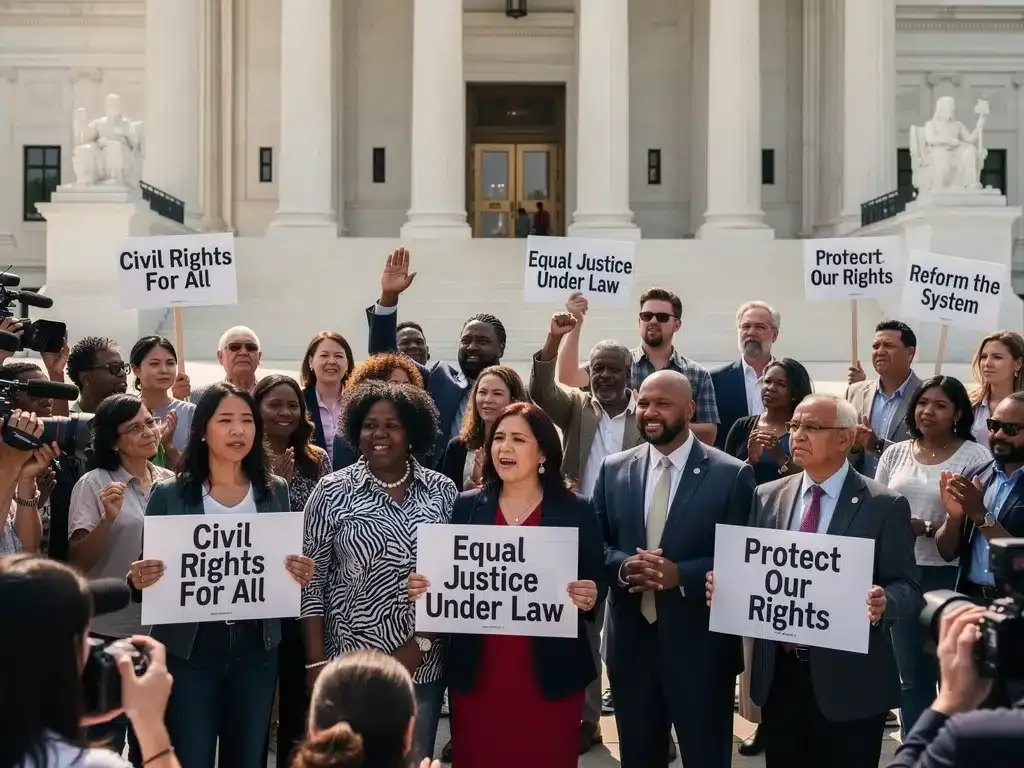
Economic Regulation and Corporate Power
The intersection of economic activity and government oversight is another area where significant Supreme Court Decisions are expected. Cases involving antitrust law, corporate liability, and labor regulations could reshape the business landscape.
These rulings will determine the extent to which the federal government can regulate large corporations and protect workers’ rights. The balance between promoting free markets and preventing monopolies or unfair labor practices is constantly being recalibrated.
Businesses, labor unions, and consumers alike will be closely watching these developments, as they could influence everything from market competition to workplace conditions and consumer prices.
Antitrust Enforcement in Modern Markets
With the rise of tech giants and increasing market concentration, antitrust law is gaining renewed attention. The Court may hear cases that redefine the standards for monopolistic behavior and market dominance.
These Supreme Court Decisions could either strengthen or weaken the government’s ability to break up monopolies and foster competition. The implications for innovation, consumer choice, and economic fairness are substantial.
The interpretation of antitrust statutes in the digital age presents unique challenges, as traditional definitions of market power may not fully capture the dynamics of platform economies and network effects.
Labor Rights and Unionization
Cases concerning labor rights, union organizing, and collective bargaining are also on the horizon. The Court’s past rulings have often swung between protecting workers and upholding employer prerogatives.
Upcoming Supreme Court Decisions could impact the ability of workers to unionize, strike, and negotiate for better wages and working conditions. The balance of power between labor and management remains a contentious issue.
These rulings will have significant consequences for the American workforce, potentially influencing wage growth, job security, and the overall strength of organized labor in the United States.
The Future of Healthcare and Social Programs
Healthcare policy and the future of major social programs, such as Medicare and Medicaid, are frequently subjects of legal challenge. The Supreme Court’s interpretations can have direct and immediate effects on millions of Americans’ access to care and essential services.
The Supreme Court Decisions expected by June 2026 could address the constitutionality of certain healthcare provisions, the scope of federal funding for social safety nets, or the rights of individuals to specific medical treatments.
These cases often involve complex legal arguments intertwined with deeply held moral and ethical considerations. The Court’s rulings will shape the landscape of public health and welfare for years to come.
Affordable Care Act Challenges
Despite numerous previous challenges, aspects of the Affordable Care Act (ACA) continue to face legal scrutiny. New cases could emerge regarding specific mandates, funding mechanisms, or the reach of federal health insurance regulations.
Any new Supreme Court Decisions impacting the ACA could potentially disrupt insurance markets, alter coverage for pre-existing conditions, and change the financial burden on states and individuals.
The longevity and stability of the ACA, a cornerstone of American healthcare policy, often depend on the Court’s interpretation of its various provisions and its alignment with constitutional principles.
Access to Reproductive Healthcare
Following the significant changes in reproductive rights, further cases related to abortion access, contraception, and maternal care are highly probable. State-level restrictions and federal responses will likely continue to generate litigation.
These Supreme Court Decisions will further define the legal framework surrounding reproductive healthcare, influencing access to services, state regulatory powers, and individual autonomy in medical decisions.
The ongoing legal battles reflect deeply divided opinions across the nation, making these cases among the most scrutinized and impactful rulings the Court will issue.
| Key Issue | Potential Impact |
|---|---|
| Federal Agency Power | Could limit regulatory authority, affecting environmental and economic policies. |
| Individual Rights | Redefine free speech, religious freedom, and anti-discrimination protections. |
| Voting Rights | Influence voter access, redistricting, and election administration. |
| Healthcare Access | Impact ACA provisions and future of reproductive healthcare services. |
Frequently Asked Questions About Upcoming Supreme Court Decisions
What makes these upcoming Supreme Court Decisions so significant?▼These decisions are significant because they address fundamental aspects of US law, potentially altering established precedents across federal power, individual rights, and economic regulation. Their outcomes will shape policy and legal interpretations for decades, impacting millions of Americans directly.
How do Supreme Court Decisions typically impact daily life?▼Supreme Court Decisions can directly affect daily life by changing laws related to healthcare, voting, environmental protections, and personal freedoms. For instance, rulings on regulatory authority can influence consumer prices or access to services, while those on rights affect individual liberties.
What is Chevron deference and why is its review important?▼Chevron deference is a legal principle where courts defer to federal agencies’ reasonable interpretations of ambiguous statutes. Its review is crucial because overturning it would increase judicial scrutiny of agency actions, potentially limiting the government’s ability to implement regulations effectively across various sectors.
How might these rulings affect the balance of power in government?▼Rulings on federal agency power could shift authority from the executive branch to Congress or the judiciary. Decisions on voting rights can influence legislative representation, while others might redefine the roles and responsibilities of federal versus state governments, altering foundational power dynamics.
Where can I find reliable information on these Supreme Court Decisions?▼Reliable information can be found from official Supreme Court websites, reputable legal news outlets, and academic legal journals. Organizations specializing in constitutional law also provide analyses. Always cross-reference information to ensure accuracy and comprehensive understanding of the complex legal issues involved.
Looking Ahead: The Enduring Impact of Supreme Court Decisions
The upcoming Supreme Court Decisions by June 2026 represent a critical juncture for American law and society. These rulings will not only address specific legal questions but will also reflect the Court’s evolving jurisprudence and its interpretation of constitutional principles in a rapidly changing world. Observers should continue to monitor these cases closely, as their outcomes will reverberate through various sectors, influencing policy, individual rights, and the balance of governmental power for years to come. The Court’s pronouncements will undoubtedly shape the legal landscape and define new challenges and opportunities for all Americans.