Maximizing Your $4,300 Single HSA Contribution Limit for 2026
Advertisements
Latest developments on Maximizing the New $4,300 Single HSA Contribution Limit for 2026, with key facts, verified sources, and what readers need to monitor next in the United States, presented clearly.
Maximizing the New $4,300 Single HSA Contribution Limit for 2026 is shaping today’s financial agenda with new details released by the Internal Revenue Service (IRS) and industry experts. This update prioritizes what changed, why it matters, and what to watch next, in a straightforward news format for individuals seeking to optimize their healthcare savings.
The increase in the Health Savings Account (HSA) contribution limit for 2026 signifies a crucial opportunity for eligible individuals. Understanding the nuances of this new limit and the strategies for leveraging it effectively is paramount for maximizing tax-advantaged savings for future medical expenses.
This article provides a comprehensive overview of the updated limits, eligibility requirements, and practical approaches to ensure you are fully prepared to capitalize on these benefits. We delve into expert analysis and provide actionable insights to guide your financial planning.
Understanding the New $4,300 Single HSA Contribution Limit for 2026
The Internal Revenue Service recently announced the new Health Savings Account (HSA) contribution limit for individuals, setting it at $4,300 for the calendar year 2026. This adjustment reflects ongoing efforts to keep pace with healthcare costs and provides a greater opportunity for Americans to save for medical expenses on a tax-advantaged basis.
This increase from previous years underscores the government's commitment to promoting health savings and encouraging individuals to take a more active role in managing their healthcare finances. For many, this higher limit translates into enhanced potential for long-term financial security related to health needs.
The announcement impacts millions of individuals enrolled in high-deductible health plans (HDHPs), allowing them to defer more pre-tax income into their HSAs. It is a significant development that warrants careful consideration for anyone planning their future healthcare expenditures.
What the New Limit Means for Savers
The $4,300 single HSA contribution limit for 2026 provides an expanded avenue for individuals to save and invest for healthcare costs. This higher ceiling means more tax-deductible contributions, tax-free growth, and tax-free withdrawals for qualified medical expenses, offering a triple tax advantage.
For those already contributing, this presents an opportunity to increase their regular contributions, while new eligible individuals can start their HSA journey with a more robust initial limit. It is a powerful tool for both short-term medical needs and long-term retirement healthcare planning.

The ability to contribute an additional amount can significantly compound savings over time, especially when coupled with strategic investment choices within the HSA. Understanding how to fully utilize this new limit is key to optimizing its benefits.
Eligibility Requirements for HSA Contributions in 2026
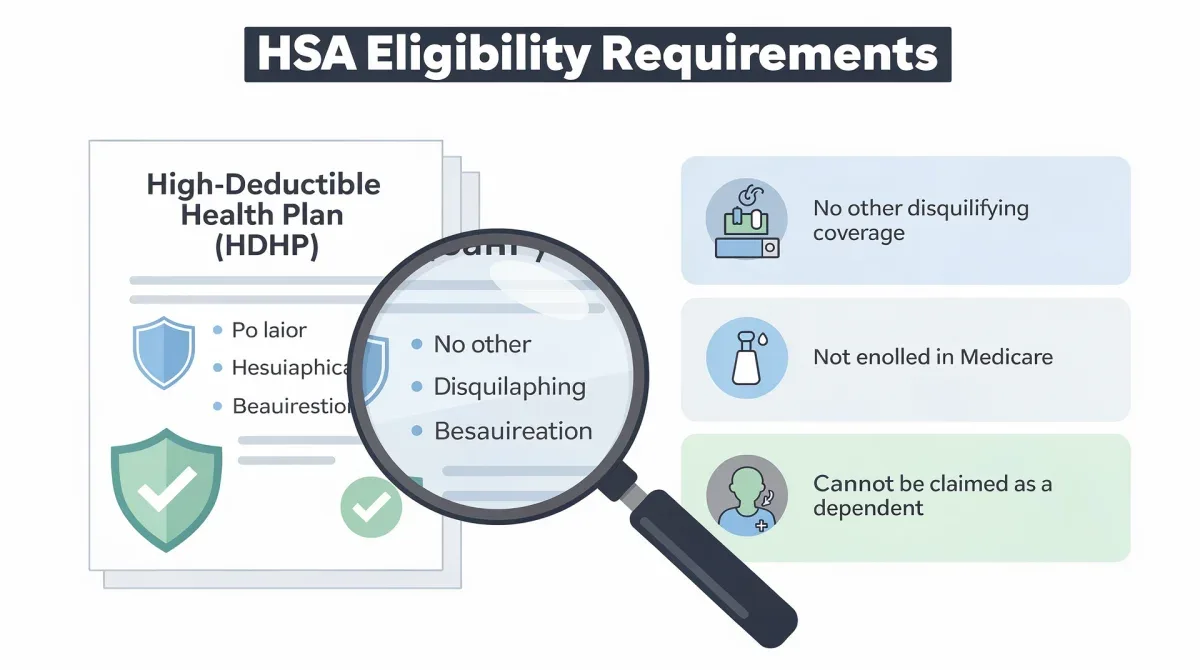
To contribute to an HSA in 2026, individuals must be covered under a high-deductible health plan (HDHP) and not be enrolled in Medicare or another health plan that is not an HDHP. The IRS defines specific criteria for what constitutes an HDHP, including minimum deductibles and maximum out-of-pocket expenses.
For 2026, the HDHP requirements are expected to be updated as well, so it is crucial to verify that your health plan meets these new thresholds. Being aware of these specific numbers is essential for ensuring your eligibility and preventing any issues with your contributions.
Individuals must also not be claimed as a dependent on someone else's tax return. Meeting these foundational requirements is the first step towards Maximizing the New $4,300 Single HSA Contribution Limit for 2026.
Key HDHP Criteria for 2026
For a health plan to qualify as an HDHP in 2026, it must have a minimum deductible and a maximum out-of-pocket expense limit. These figures are typically adjusted annually by the IRS to account for inflation and healthcare cost trends.
It is important to consult the official IRS guidelines for 2026 as soon as they are released to confirm your plan's compliance. Your employer's benefits administrator can also provide specific details regarding your plan's HDHP status.
Failure to meet these HDHP criteria means you are not eligible to contribute to an HSA, even if you meet other personal eligibility requirements. Always verify your plan's status before making contributions.
Strategies for Maximizing Your $4,300 HSA Contributions
Maximizing the New $4,300 Single HSA Contribution Limit for 2026 involves more than just contributing the maximum amount; it requires strategic planning. One effective strategy is to front-load your contributions at the beginning of the year, allowing your funds more time to grow through investments.
Another approach is to automate your contributions through payroll deductions, ensuring consistent savings throughout the year without needing to remember manual transfers. This set-it-and-forget-it method helps ensure you reach the maximum limit.
Consider utilizing the 'last-month rule' if you become eligible mid-year, which allows you to contribute the full annual amount if you are HSA-eligible on December 1st. However, be mindful of the 'testing period' requirement that follows.
Leveraging Catch-Up Contributions
For individuals aged 55 and older, an additional catch-up contribution is permitted, further enhancing their ability to save. This amount is separate from the standard contribution limit and offers a significant boost to retirement healthcare savings.
The catch-up contribution for 2026 is expected to remain consistent with previous years, but it's always prudent to confirm the exact figure with the IRS. This provision is especially beneficial for those closer to retirement who may have higher anticipated medical expenses.
Combining the standard $4,300 limit with the catch-up contribution allows older individuals to significantly increase their tax-advantaged healthcare nest egg. This dual benefit makes HSAs an even more attractive savings vehicle.
Tax Advantages and Investment Potential of HSAs
The appeal of HSAs lies in their unique triple tax advantage: contributions are tax-deductible, earnings grow tax-free, and withdrawals for qualified medical expenses are also tax-free. This makes HSAs one of the most powerful savings and investment vehicles available.
Many HSA providers offer a range of investment options, from mutual funds to exchange-traded funds (ETFs), allowing your contributions to grow over time. Unlike flexible spending accounts (FSAs), HSA funds roll over year after year, never expiring.
This long-term growth potential, coupled with the tax benefits, positions HSAs as an excellent tool for retirement planning, particularly for healthcare costs, which often increase significantly in later life. Understanding this investment aspect is key to Maximizing the New $4,300 Single HSA Contribution Limit for 2026.
Investing Your HSA Funds Wisely
Once your HSA reaches a certain cash threshold, typically around $1,000, many providers allow you to invest the excess funds. This enables your money to work harder for you, potentially generating substantial returns over decades.
When choosing investments, consider your risk tolerance and time horizon. A diversified portfolio aligned with your financial goals can help maximize your HSA's growth potential.
Regularly reviewing your investment performance and making adjustments as needed is also a crucial part of a proactive HSA management strategy. This active management ensures your funds are growing effectively.

Common Pitfalls to Avoid When Using Your HSA
While HSAs offer numerous benefits, there are common pitfalls that individuals should be aware of to avoid penalties and maximize their savings. One significant mistake is using HSA funds for non-qualified medical expenses, which results in taxable income and a potential 20% penalty if under age 65.
Another pitfall is not understanding the distinction between an HDHP and other health plans, leading to ineligible contributions. Always confirm your plan's status before contributing to avoid complications with the IRS.
Failing to keep accurate records of medical expenses is also a common error. Proper documentation is crucial for justifying tax-free withdrawals and demonstrating compliance during an audit. Careful record-keeping is vital for Maximizing the New $4,300 Single HSA Contribution Limit for 2026.
Maintaining Proper Documentation
Keeping meticulous records of all qualified medical expenses, even those you pay out-of-pocket, is paramount. This documentation supports tax-free withdrawals from your HSA, whether now or in the future.
Digital copies of receipts, invoices, and explanation of benefits (EOB) statements are highly recommended. Many HSA providers offer tools to help you track and categorize these expenses.
This diligent record-keeping ensures that you can confidently justify any withdrawals, especially if you decide to reimburse yourself for past expenses years down the line. It protects your tax-free status.
HSA vs. Other Healthcare Savings Options
Comparing HSAs with other healthcare savings options, such as Flexible Spending Accounts (FSAs), reveals distinct advantages that make HSAs particularly attractive for long-term planning. Unlike FSAs, HSA funds roll over indefinitely and are portable, meaning they stay with you even if you change employers or health plans.
FSAs, while offering tax advantages, are typically 'use-it-or-lose-it' accounts, meaning funds generally expire at the end of the plan year. This fundamental difference makes HSAs a superior choice for accumulating substantial savings over time.
Furthermore, the investment potential of HSAs sets them apart, allowing your funds to grow significantly over decades, a feature not typically available with FSAs. This long-term growth is a key component of Maximizing the New $4,300 Single HSA Contribution Limit for 2026.
The Role of HSAs in Retirement Planning
Many financial experts view HSAs as a powerful retirement savings vehicle, often dubbed a 'stealth IRA.' After age 65, you can withdraw HSA funds for any purpose without penalty, though non-qualified withdrawals will be taxed as ordinary income.
This flexibility makes HSAs a versatile tool for retirement, allowing individuals to cover medical expenses tax-free or use the funds for general living expenses if their healthcare needs are met. It adds another layer of financial security.
The ability to pay for healthcare costs tax-free in retirement, when medical expenses tend to be higher, significantly enhances an individual's overall financial well-being. This long-term perspective is crucial for optimizing HSA benefits.
Future Outlook and Potential Changes to HSA Limits
While the $4,300 single HSA contribution limit for 2026 is set, future adjustments are always a possibility, influenced by inflation, healthcare costs, and legislative changes. The IRS typically reviews and updates these limits annually, so staying informed is crucial.
It is important for individuals to monitor official IRS announcements and financial news sources for any further updates or proposed changes that could impact HSA rules. Proactive awareness allows for timely adjustments to personal financial strategies.
Policy discussions around healthcare reform could also potentially affect HSA provisions, though the core benefits of HSAs have remained robust over time. Continuous monitoring of these developments is part of a comprehensive financial plan.
Staying Informed on HSA Regulations
Subscribing to financial news alerts and regularly checking the IRS website are excellent ways to stay current on HSA regulations. Your HSA provider may also offer updates and educational resources.
Consulting with a financial advisor specializing in healthcare savings can provide personalized insights and ensure your strategy remains compliant and optimized. Expert guidance can be invaluable in navigating complex rules.
Being well-informed allows you to adapt your contribution strategy effectively, ensuring you are always Maximizing the New $4,300 Single HSA Contribution Limit for 2026 and any subsequent changes.
| Key Point | Brief Description |
|---|---|
| New Limit | Single HSA contribution limit for 2026 set at $4,300. |
| Eligibility | Must be covered by an HDHP and not enrolled in Medicare. |
| Tax Benefits | Triple tax advantage: deductible contributions, tax-free growth, tax-free withdrawals. |
| Investment | Funds can be invested for long-term growth, enhancing retirement savings. |
Frequently Asked Questions About HSA Contributions
What is the new single HSA contribution limit for 2026?▼The Internal Revenue Service (IRS) has announced that the single Health Savings Account (HSA) contribution limit for 2026 will be $4,300. This represents an increase from previous years, offering individuals a greater opportunity to save for qualified medical expenses on a tax-advantaged basis.
Who is eligible to contribute to an HSA in 2026?▼To be eligible, you must be covered by a high-deductible health plan (HDHP) and not be enrolled in Medicare or another non-HDHP health plan. You also cannot be claimed as a dependent on someone else's tax return. Verifying your plan's HDHP status is crucial.
What are the main tax benefits of an HSA?▼HSAs offer a triple tax advantage: contributions are tax-deductible, earnings grow tax-free, and withdrawals for qualified medical expenses are tax-free. This makes them a highly efficient tool for saving and investing for healthcare costs, especially for retirement.
Can I invest my HSA funds?▼Yes, many HSA providers allow you to invest funds once your account reaches a certain cash threshold. This enables your contributions to grow over time, similar to a retirement account, significantly enhancing your long-term savings potential for future medical expenses.
How can I maximize my HSA contributions for 2026?▼To maximize your contributions, consider setting up automated payroll deductions to consistently reach the $4,300 limit. If eligible, utilize catch-up contributions if you are 55 or older. Additionally, invest your funds wisely to leverage their tax-free growth potential for long-term benefits.
Looking Ahead
The new $4,300 single HSA contribution limit for 2026 provides a significant opportunity for individuals to enhance their healthcare savings and long-term financial planning. Understanding the eligibility criteria, leveraging the triple tax advantages, and strategically investing funds are crucial steps for Maximizing the New $4,300 Single HSA Contribution Limit for 2026. As healthcare costs continue to rise, proactive engagement with your HSA can provide substantial financial security. Staying informed on future IRS announcements and consulting with financial professionals will ensure your strategy remains optimized and compliant, securing your health and wealth for years to come.