Federal Home Energy Rebates Expand: Up to $8,000 for Appliances
Advertisements
Homeowners in the United States can now receive up to $8,000 through expanded federal home energy rebates in 2026, making it more affordable to upgrade major appliances and improve overall energy efficiency.
Exciting news for homeowners across the nation! The year 2026 brings significant changes to federal programs designed to boost home energy efficiency. With the expansion of federal home energy rebates, you could be eligible to receive up to $8,000 for upgrading your major appliances, transforming your living space and your utility bills.
Understanding the new federal home energy rebates for 2026
The landscape of home energy efficiency is rapidly evolving, and 2026 marks a pivotal year with the expansion of federal initiatives. These new rebate programs are designed to incentivize homeowners to invest in energy-efficient upgrades, ultimately reducing their carbon footprint and saving money on utility bills. The focus is broad, encompassing everything from heating and cooling systems to water heaters and insulation, all aimed at creating more sustainable and cost-effective homes.
This expansion isn't merely an increase in funding; it represents a more streamlined and accessible approach to energy savings. The government has recognized the need for greater support for homeowners looking to make environmentally conscious decisions, leading to these enhanced opportunities. The goal is to make high-efficiency upgrades attainable for a wider segment of the population, fostering a nationwide movement towards energy independence.
What's new in the 2026 rebate structure?
The 2026 rebate structure introduces several key improvements that make it more attractive for homeowners. One of the most notable changes is the increased cap on individual rebates, allowing for more substantial financial assistance. This means that a single household could potentially receive up to $8,000, a significant sum that can offset a considerable portion of upgrade costs.
- Higher individual rebate caps for major appliance categories.
- Broader eligibility criteria to include more households.
- Simplified application processes for quicker access to funds.
- Expanded list of qualifying energy-efficient appliances and home improvements.
These enhancements are geared towards making the process less daunting and more rewarding, ensuring that the benefits are tangible and immediate for those who participate. The federal government's commitment to energy efficiency is clear through these comprehensive updates.

In essence, the 2026 federal home energy rebates are not just about saving money; they are about empowering homeowners to make responsible choices for their environment and their financial future. By understanding the nuances of these expanded programs, individuals can strategically plan their home improvements to maximize both their energy savings and their rebate potential. It's a win-win scenario that benefits both the homeowner and the planet.
Qualifying for federal rebates: who is eligible?
Understanding eligibility is the first crucial step for any homeowner considering these valuable rebates. The expanded federal home energy rebates for 2026 are designed to be inclusive, aiming to reach a broad spectrum of American households. While specific criteria can vary slightly based on the type of upgrade and the state you reside in, there are general guidelines that apply across the board.
Typically, eligibility is tied to several factors, including income levels, the type of home, and the specific energy efficiency improvements being made. The intent is to ensure that the rebates provide meaningful assistance to those who can benefit most from reducing their energy consumption and associated costs.
Income and household requirements
Many federal rebate programs, including these expanded energy initiatives, often consider household income as a primary factor for eligibility. This ensures that the benefits are directed towards families who may face financial barriers to making necessary home improvements. While exact thresholds will be detailed in official program guidelines, it's common for programs to categorize eligibility based on a percentage of the area median income (AMI).
- Income verification may be required during the application process.
- Programs often prioritize low to moderate-income households.
- Specific income caps will be published by relevant federal agencies.
It's important for homeowners to consult the official government websites or contact their local energy assistance programs for the most up-to-date and accurate income requirements. These details are critical for determining whether your household qualifies for the maximum rebate amounts.
Beyond income, the type of residence also plays a role. These rebates are primarily for primary residences, meaning homes where the owner lives for the majority of the year. This distinction helps ensure that the funds are used to improve the energy efficiency of homes that are actively contributing to the daily energy consumption of American families. Both single-family homes and certain types of multi-family dwellings may qualify, depending on the program's specific language. It is always advisable to review the fine print to confirm your property type's eligibility before embarking on any upgrades. The overarching goal is to make sustainable living more accessible and affordable for all.
Maximizing your $8,000 rebate potential
The prospect of receiving up to $8,000 in federal home energy rebates is a significant incentive, but navigating the various programs and optimizing your upgrades can be complex. To truly maximize your rebate potential, a strategic approach is essential. This involves careful planning, understanding which upgrades offer the best return, and combining different incentives where possible.
It's not just about replacing an old appliance; it's about making informed decisions that align with the rebate criteria and contribute most effectively to your home's overall energy performance. Thinking holistically about your home's energy consumption will yield the best results, both in terms of rebates and long-term savings.
Strategic appliance upgrades for maximum savings
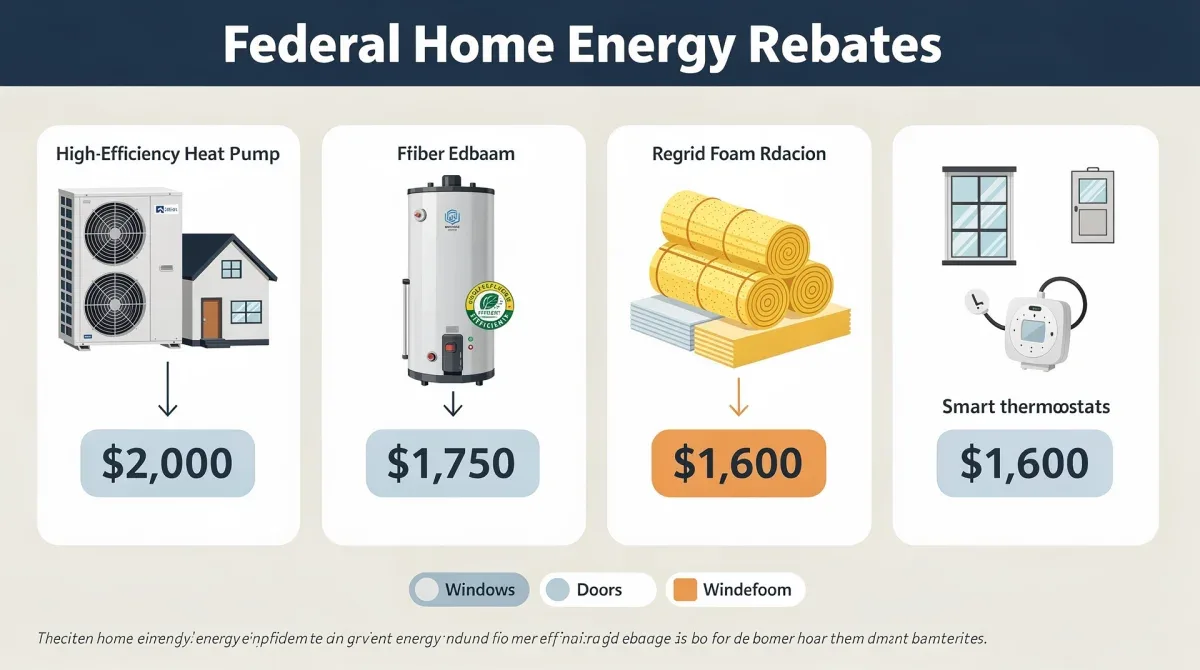
Certain major appliances are consistently highlighted in energy rebate programs due to their significant impact on household energy consumption. Focusing on these high-impact upgrades can help you hit the $8,000 mark more efficiently. Heat pumps, for instance, are often heavily incentivized because they provide both heating and cooling with remarkable efficiency, drastically reducing reliance on traditional fossil fuels.
- Heat pump water heaters: Highly efficient for hot water generation.
- High-efficiency HVAC systems: Including central air conditioners and furnaces.
- Advanced insulation and weatherization: Reducing heat loss and gain.
- Energy-efficient windows and doors: Minimizing drafts and improving thermal performance.
Beyond these, other upgrades like smart thermostats, energy-efficient refrigerators, and even induction cooktops are increasingly becoming eligible. The key is to choose upgrades that not only qualify for the rebates but also address the biggest energy drains in your home. A professional home energy audit can be invaluable in identifying these areas and prioritizing your investments.
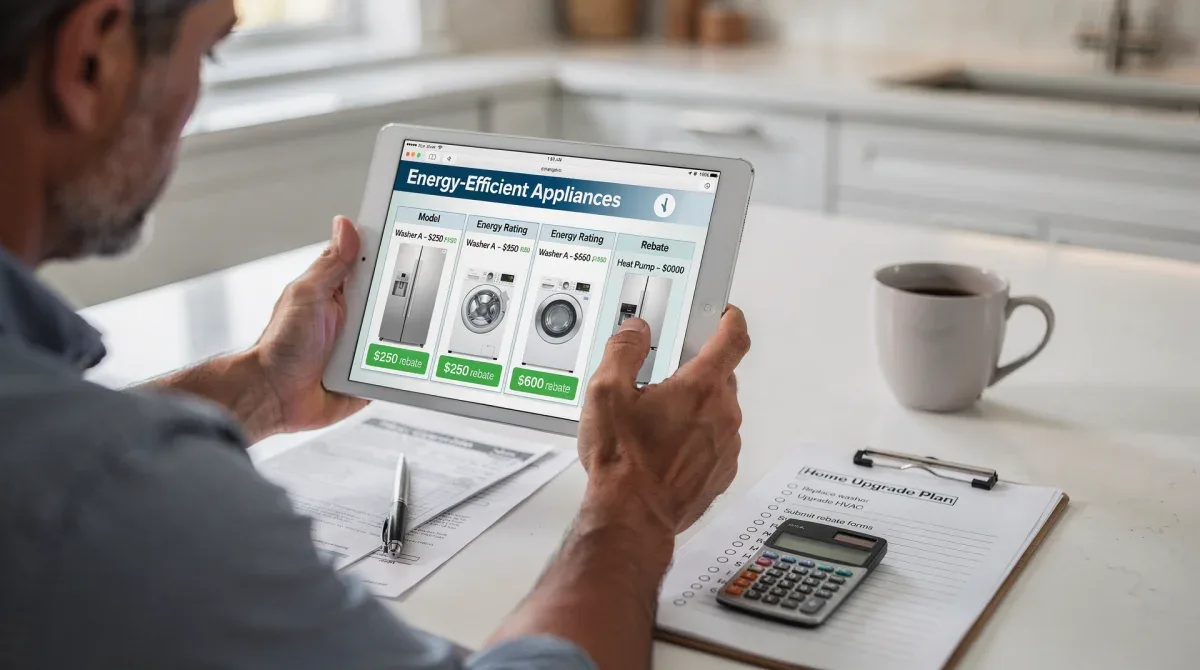
Combining multiple eligible upgrades can rapidly accumulate towards the maximum rebate amount. For example, installing a new heat pump system alongside improved insulation and a heat pump water heater could easily qualify you for substantial financial assistance. It's crucial to keep detailed records of all purchases and installations, as these will be necessary for the application process. By strategically bundling your improvements, you can not only enhance your home's comfort and value but also secure the most significant financial benefit from these federal programs.
The application process: steps to secure your rebates
Once you've identified the qualifying upgrades and confirmed your eligibility, the next step is navigating the application process to secure your federal home energy rebates. While the government aims to simplify this, it still requires careful attention to detail and timely submission of documentation. Understanding the typical flow of the application can help you prepare and avoid common pitfalls.
The process generally involves several stages, from initial research and purchase to final submission and approval. Being organized and proactive throughout each stage will significantly improve your chances of a smooth and successful rebate claim.
Documentation and submission tips
Accurate and complete documentation is paramount when applying for federal rebates. Before you even begin your upgrade project, it's wise to gather all necessary information about the appliance or service you intend to purchase. This includes technical specifications, energy efficiency ratings, and proof of purchase. The more prepared you are, the less likely you are to encounter delays.
- Proof of purchase: Detailed receipts or invoices showing the cost and date of installation.
- Contractor information: Licenses and certifications of the installers.
- Product specifications: Energy Star ratings or other efficiency certifications.
- Home energy audit reports: If required, showing before and after efficiency.
Many programs will require you to submit your application online through a dedicated portal, while others might accept mail-in forms. Always double-check the specific submission method and any deadlines associated with the rebate program. It's also a good practice to keep copies of all submitted documents for your records. Some programs operate on a first-come, first-served basis or have limited funding, so prompt submission after installation is often beneficial. By meticulously preparing your documentation and adhering to all guidelines, you can confidently navigate the application process and successfully claim your deserved federal home energy rebates.
Long-term benefits of energy-efficient upgrades
Investing in energy-efficient upgrades with the help of federal home energy rebates offers more than just immediate financial relief; it provides a cascade of long-term benefits that extend far beyond the initial rebate check. These improvements contribute to a more sustainable lifestyle, enhance home comfort, and can significantly increase property value. It's an investment that pays dividends for years to come.
The shift towards energy efficiency is not just a trend but a fundamental change in how we manage our homes and resources. Embracing these upgrades positions homeowners at the forefront of this movement, reaping both economic and environmental rewards.
Reduced utility bills and environmental impact
Perhaps the most tangible long-term benefit of energy-efficient upgrades is the substantial reduction in monthly utility bills. By installing high-efficiency appliances and improving insulation, homes consume less electricity, natural gas, or other fuels. This directly translates into lower operational costs, freeing up household income for other priorities.
Beyond personal savings, these upgrades have a profound positive impact on the environment. Lower energy consumption means a reduced demand for fossil fuels, leading to decreased greenhouse gas emissions. This contributes to cleaner air and water, helping to combat climate change and preserve natural resources for future generations. Every energy-efficient home plays a part in this larger environmental effort.
Increased home comfort and value
Energy-efficient upgrades also dramatically enhance the comfort of your living space. Improved insulation and modern HVAC systems ensure more consistent indoor temperatures, eliminating drafts and hot spots. This creates a more pleasant and enjoyable environment year-round, regardless of external weather conditions. Imagine a home where every room feels just right, without the constant battle against temperature fluctuations.
Furthermore, these upgrades can significantly boost your home's market value. Prospective buyers are increasingly looking for homes that are not only aesthetically pleasing but also energy-efficient and cost-effective to maintain. A home with new, high-efficiency appliances, updated insulation, and a modern HVAC system stands out in the real estate market, commanding a higher price and attracting more interested buyers. It's a smart investment that improves your quality of life while simultaneously building equity.
Future outlook: what to expect beyond 2026
While the expanded federal home energy rebates for 2026 present an incredible opportunity, it's natural for homeowners to wonder about the future of such programs. The trajectory suggests a continued commitment from the federal government towards energy efficiency and sustainability. Policies are often designed with long-term goals in mind, aiming for a gradual but consistent transition to a greener economy.
Staying informed about potential future changes and extensions will be key for homeowners planning multi-stage upgrades or simply keeping an eye on evolving opportunities. These programs are dynamic, adapting to technological advancements and national energy goals.
Anticipated program extensions and new technologies
Based on current trends and governmental priorities, it is highly probable that federal home energy rebate programs will see extensions and modifications beyond 2026. As the nation continues its push towards net-zero emissions, incentives for energy-efficient upgrades are likely to remain a cornerstone of federal policy. We might see further increases in rebate amounts, broader eligibility, or the introduction of new categories of eligible improvements.
- Potential for extended program deadlines and funding.
- Inclusion of emerging smart home technologies.
- Increased focus on renewable energy sources like solar and wind.
- Enhanced incentives for whole-home energy retrofits.
The continuous evolution of technology also plays a significant role. As new, more efficient appliances and home systems become available, it's expected that rebate programs will adapt to include them. For instance, advancements in smart home technology, battery storage solutions, and even micro-grid integration could become future areas of focus for federal incentives. This forward-looking approach ensures that the programs remain relevant and impactful, supporting the adoption of cutting-edge solutions for energy efficiency.
Homeowners should make it a practice to regularly check official government resources, such as the Department of Energy and the Environmental Protection Agency websites, for the latest updates. Subscribing to newsletters from reputable energy efficiency organizations can also provide timely information. By staying proactive and informed, you can continue to leverage federal support for making your home more energy-efficient and environmentally friendly for years to come. The future of home energy is bright, and these programs are paving the way for a sustainable and cost-effective tomorrow.
Preparing your home for federal rebate opportunities
As the expanded federal home energy rebates for 2026 become a reality, proactive preparation is crucial for homeowners looking to take full advantage. Waiting until the last minute can lead to missed opportunities or rushed decisions. A well-thought-out plan ensures that your upgrades are not only eligible for rebates but also genuinely enhance your home’s energy performance and your family's comfort.
Preparation involves understanding your current energy consumption, researching potential upgrades, and lining up the right professionals to execute the work. It’s a multi-faceted approach that pays off in both financial savings and a more sustainable living environment.
Initial home energy audit and professional consultation
One of the most effective first steps in preparing for federal rebates is to conduct a comprehensive home energy audit. This audit, often performed by certified professionals, will identify areas of energy loss and inefficiency in your home. It provides a baseline understanding of where your energy dollars are going and highlights the most impactful upgrades you can make. An audit report can also serve as valuable documentation for certain rebate applications.
- Identify specific areas of energy waste in your home.
- Prioritize upgrades based on potential energy savings and rebate eligibility.
- Receive expert recommendations tailored to your home's unique needs.
- Gain insights into the long-term return on investment for various improvements.
Following the audit, consulting with qualified contractors and energy specialists is essential. These professionals can provide quotes for eligible appliances and installations, ensuring that the products meet federal efficiency standards. They can also guide you through the technical aspects of the upgrades and help confirm that the work performed will qualify for the available rebates. Establishing a relationship with reputable contractors early on can prevent headaches down the line and ensure a smooth installation process. This careful planning and professional guidance are key to successfully leveraging the federal home energy rebates and transforming your home into an energy-efficient haven.
| Key Point | Brief Description |
|---|---|
| Expanded Rebates 2026 | Homeowners can receive up to $8,000 for energy-efficient appliance upgrades. |
| Eligibility Criteria | Includes income considerations, primary residence, and specific appliance types. |
| Maximizing Savings | Strategic upgrades like heat pumps and insulation offer the best return. |
| Long-Term Benefits | Reduced utility bills, increased home comfort, and higher property value. |
Frequently asked questions about federal energy rebates
What types of appliances qualify for the 2026 federal energy rebates?▼The 2026 federal energy rebates primarily cover major energy-efficient appliances and home improvements. This includes heat pumps, heat pump water heaters, high-efficiency HVAC systems, advanced insulation, and energy-efficient windows and doors. Always check official guidelines for the most current list of eligible items and specific efficiency ratings.
Is there an income requirement to be eligible for these rebates?▼Yes, many federal energy rebate programs include income-based eligibility criteria to ensure assistance reaches households that need it most. While specific thresholds vary, they often relate to a percentage of the area median income (AMI). Homeowners should consult official government resources for precise income limits applicable to their region.
How do I apply for the federal home energy rebates?▼The application process typically involves purchasing and installing eligible energy-efficient appliances, then submitting detailed documentation. This includes proof of purchase, contractor information, and product specifications. Applications are often processed through online portals or mail-in forms, with specific instructions provided by the relevant federal agencies.
Can I combine these federal rebates with state or local incentives?▼In many cases, yes, you can combine federal home energy rebates with state, local, or utility company incentives. This stacking of programs can significantly increase your overall savings. However, it's crucial to verify the specific rules for each program, as some may have restrictions on combining incentives. Always check with all relevant program administrators.
What are the long-term benefits of upgrading to energy-efficient appliances?▼Upgrading to energy-efficient appliances offers numerous long-term benefits beyond the initial rebate. These include significantly reduced monthly utility bills, improved home comfort through consistent temperatures, a lower environmental footprint due to decreased energy consumption, and an increase in your home's overall market value, making it a wise investment.
Conclusion
The expansion of federal home energy rebates in 2026 presents an unprecedented opportunity for homeowners to invest in energy-efficient upgrades, potentially saving up to $8,000. These programs not only alleviate the financial burden of modernizing your home but also contribute to a more sustainable future by reducing energy consumption and environmental impact. By understanding the eligibility criteria, strategically planning your upgrades, and meticulously navigating the application process, you can transform your home into a more comfortable, valuable, and eco-friendly living space for years to come. This initiative underscores a national commitment to energy independence and a greener tomorrow, making now an ideal time for homeowners to act.