Housing Market Trends: Median Home Prices See 1.2% Increase, Inventory Tight
Advertisements
Recent housing market trends show median home prices rising 1.2% over the last quarter while inventory remains tight across much of the United States.
The combination of higher prices and limited supply continues to shape conditions for buyers and sellers, despite broader economic uncertainty.
This article examines what these shifts mean for the housing market and which factors could influence prices, inventory, and competition next.
Median Home Prices See 1.2% Increase: A Closer Look
The recent 1.2% increase in median home prices represents a significant development in the ongoing housing market trends. This rise, observed over the last quarter, indicates a resilience in demand and a continued willingness among buyers to invest in property, even amidst higher interest rates and economic uncertainties.
This growth is not uniform across all regions, with certain metropolitan areas experiencing more pronounced gains than others.
According to data released by the National Association of Realtors (NAR) on [Date of NAR Report], the national median existing-home price for all housing types in [Specific Month/Quarter] was [Specific Dollar Amount], an increase of 1.2% from the previous quarter.
Such an increase signals a robust underlying demand, which continues to outpace the available supply of homes. For potential buyers, this means a more competitive landscape, while sellers may find themselves in a favorable position to achieve their desired asking prices.
Regional Variations in Price Growth
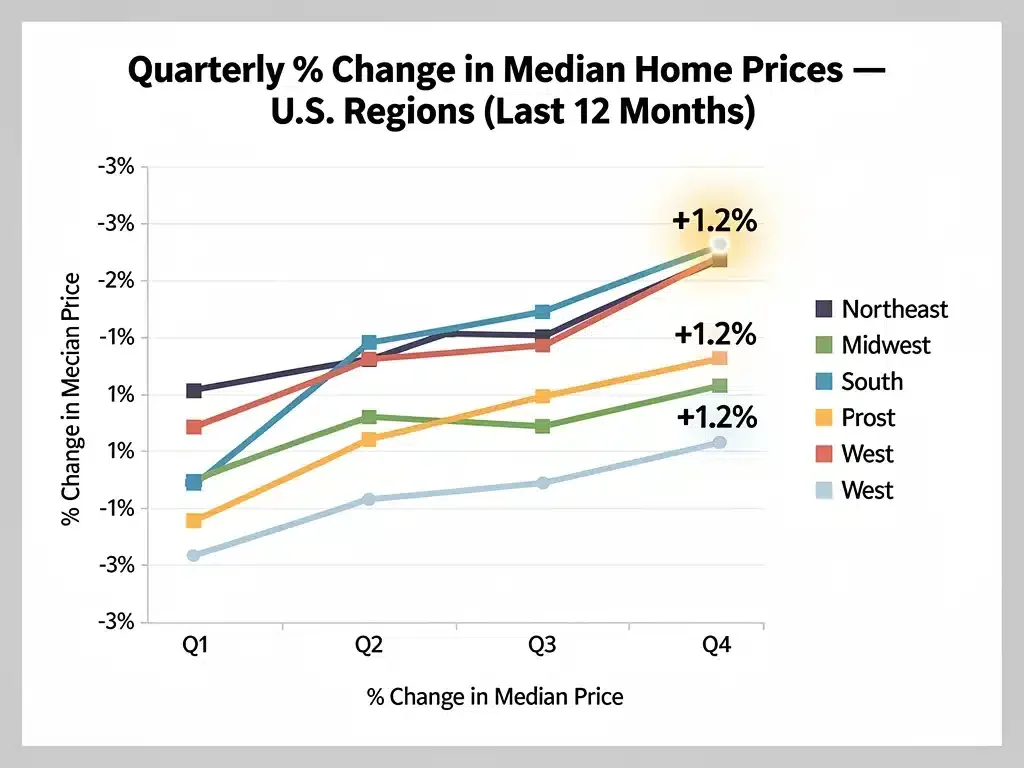
While the national average shows a 1.2% increase, regional analyses reveal a more nuanced picture of housing market trends. For instance, the Northeast saw a [Specific Percentage]% increase, driven by strong job markets and limited new construction.
Conversely, some markets in the Midwest experienced more modest gains, reflecting a different balance of supply and demand. These regional disparities are crucial for understanding localized market conditions and making informed decisions about buying or selling property.
Northeast: Strong demand, limited new builds drive significant price hikes.
South: Continued population growth fuels steady, but sometimes volatile, price increases.
Midwest: More balanced markets, with moderate price appreciation.
West: High-cost areas see continued demand, though affordability remains a challenge.
These variations underscore that while national statistics provide a general overview, local market intelligence is paramount. Buyers and sellers should consult with local real estate professionals to understand the specific dynamics at play in their desired areas, as national averages can sometimes mask important local differences in housing market trends.
Inventory Remains Tight: The Supply Side Challenge
One of the most persistent challenges in current housing market trends is the critically tight inventory of homes for sale. This scarcity is a primary driver behind the continued upward pressure on median home prices, creating a seller’s market in many areas across the United States.
As of [Specific Date], the total housing inventory stood at [Specific Number] units, down [Specific Percentage]% from a year ago, representing a [Specific Number]-month supply at the current sales pace, according to NAR. A balanced market typically has a six-month supply, highlighting the significant deficit currently observed.
This low inventory is a multifaceted issue, influenced by factors such as underbuilding in previous years, homeowners reluctant to sell due to favorable mortgage rates on their current homes, and ongoing supply chain issues impacting new construction. The tight supply means fewer choices for buyers and often leads to bidding wars, further exacerbating price increases.
The impact of tight inventory extends beyond just higher prices; it also affects market liquidity and the overall pace of transactions. Homes are selling faster, often above their asking price, as buyers compete for limited options, a clear indicator of the intensity of current housing market trends.
Factors Contributing to Low Inventory
Several key factors contribute to the ongoing low housing inventory, a critical component of current housing market trends. One significant element is the decade of underbuilding that followed the 2008 financial crisis, which created a substantial deficit in new housing units.
Another major factor is the ‘lock-in effect,’ where homeowners with historically low mortgage rates are hesitant to sell. Moving would mean taking on a new mortgage at significantly higher rates, making the decision to list their homes less attractive despite potential equity gains. This reluctance actively constrains the flow of existing homes onto the market.
Underbuilding: Years of insufficient new construction created a supply deficit.
Lock-in Effect: Homeowners with low mortgage rates are disincentivized to sell.
Construction Costs: High material and labor costs impact the pace and affordability of new builds.
Zoning Regulations: Restrictive local zoning laws limit density and new housing developments.
These combined factors create a complex supply-side challenge that is not easily resolved in the short term. Addressing the inventory crunch will require coordinated efforts from policymakers, builders, and local communities to facilitate more housing development and encourage existing homeowners to participate in the market, thereby influencing future housing market trends.
Impact on Buyers: Navigating a Competitive Landscape
For prospective homebuyers, the current housing market trends present a uniquely challenging and competitive landscape. The combination of rising median home prices and severely limited inventory means that buyers must be well-prepared, agile, and often willing to make swift decisions to secure a property.
Buyers are frequently encountering multiple-offer situations, where homes receive several bids shortly after being listed. This environment often necessitates waiving contingencies, offering above asking price, and being pre-approved for mortgages to stand out in a crowded field. The pressure to act quickly can lead to stress and the potential for overpaying if not approached strategically.
Affordability remains a significant concern, especially for first-time buyers, as rising prices coupled with higher interest rates push homeownership further out of reach for many. Understanding these challenges is the first step in successfully navigating the current market conditions and achieving homeownership goals amidst evolving housing market trends.
Strategies for Successful Homebuying
To succeed in today’s competitive market, buyers need to adopt specific strategies that enhance their chances of securing a home. Financial preparedness is paramount, which includes getting pre-approved for a mortgage and understanding one’s budget limits before starting the search.
Working with an experienced local real estate agent who has a deep understanding of neighborhood-specific housing market trends is also crucial. Such an agent can provide access to off-market listings, offer insights into local pricing, and help craft compelling offers that stand out.
Get Pre-Approved: Secure mortgage pre-approval to demonstrate financial readiness.
Be Flexible: Consider a wider range of neighborhoods or property types.
Act Quickly: Be prepared to make strong offers soon after a desirable home is listed.
Work with an Expert: Partner with a local agent knowledgeable in competitive markets.
Additionally, buyers should be realistic about their expectations and prioritize their ‘must-haves’ versus ‘nice-to-haves.’ In a market defined by tight inventory and rising prices, compromise may be necessary. Patience, combined with a proactive approach, will be key for navigating these challenging housing market trends.
Implications for Sellers: A Favorable Market
While the current housing market trends pose challenges for buyers, they present a distinctly favorable environment for sellers. The combination of increased median home prices and tight inventory means that well-maintained homes in desirable locations are likely to attract significant interest and potentially sell quickly, often above the asking price.
Sellers are benefiting from reduced time on market, with many properties receiving multiple offers within days of listing. This strong demand allows sellers to dictate terms more effectively, including minimal contingencies and expedited closing timelines. The competitive landscape empowers sellers to maximize their returns on investment.
However, even in a seller’s market, strategic planning is essential to capitalize fully on these advantageous conditions. Understanding local housing market trends and preparing a home effectively can further enhance a seller’s position and ensure a smooth, profitable transaction.
Maximizing Value in a Seller’s Market
To fully leverage the current seller’s market, homeowners considering selling should focus on presentation and strategic pricing. Even minor upgrades and professional staging can significantly impact a home’s appeal and final sale price, attracting more potential buyers.
Working with a skilled real estate agent is vital for setting the optimal listing price. While demand is high, overpricing can still deter buyers, leading to longer market times. An agent can provide comparative market analyses and advise on the best pricing strategy based on recent housing market trends in the area.
Enhance Curb Appeal: First impressions matter; invest in landscaping and exterior cleanliness.
Professional Staging: Present your home in the best possible light to attract more buyers.
Strategic Pricing: Price competitively based on local market analysis to generate interest.
Effective Marketing: Utilize high-quality photography and robust online listings.
Furthermore, sellers should be prepared for quick decision-making and efficient negotiation. Having a clear understanding of their bottom line and desired closing terms before listing can streamline the process and lead to a more satisfactory outcome. The current housing market trends offer a unique opportunity for sellers to achieve their financial goals.
Economic Factors Driving Current Housing Market Trends
Several significant economic factors are underpinning the current housing market trends, influencing both demand and supply dynamics. Interest rates, inflation, and broader economic stability play crucial roles in shaping consumer confidence and purchasing power within the real estate sector.
The Federal Reserve’s monetary policy, particularly its decisions on interest rates, directly impacts mortgage rates, which in turn affect buyer affordability. While rates have seen fluctuations, they remain higher than the historic lows of recent years, adding another layer of complexity for potential homeowners.
Inflation also plays a dual role: it can increase the cost of construction materials, contributing to higher new home prices, but it can also make real estate an attractive hedge against rising costs for investors. Understanding these macroeconomic forces is essential for comprehending the trajectory of future housing market trends.
Interest Rates and Affordability
Mortgage interest rates are a primary determinant of housing affordability, directly impacting monthly payments for homebuyers. The recent increases in these rates have, to some extent, cooled demand from certain buyer segments, particularly those at the lower end of the budget spectrum.
However, despite higher rates, demand has remained robust, suggesting that many buyers are either adapting to the new financial landscape or are less sensitive to rate fluctuations due to significant equity from previous home sales. The interplay between rates and the tight inventory continues to shape buying decisions and overall housing market trends.
Higher Rates: Increase monthly mortgage payments, reducing purchasing power.
Buyer Adaptation: Some buyers adjust budgets or seek smaller homes.
Equity Factor: Sellers with substantial equity may be less impacted by higher rates on new loans.
The trajectory of interest rates will continue to be a critical watch point for the housing market. Any significant shifts, either up or down, could have profound effects on buyer activity and the overall balance of supply and demand, thereby influencing the prevailing housing market trends.
The Role of New Construction in Alleviating Tight Inventory
New construction plays a pivotal role in addressing the tight inventory issues that characterize current housing market trends. An increase in new housing starts and completions is essential to alleviate supply constraints and ultimately help stabilize or moderate median home price growth across the United States.
However, the pace of new construction has faced numerous headwinds, including labor shortages, rising material costs, and complex regulatory hurdles. These challenges have slowed down the ability of builders to bring new homes to the market quickly enough to meet the sustained demand from buyers.
Despite these obstacles, there has been a concerted effort by some builders to ramp up production, particularly in areas experiencing rapid population growth. The success of these efforts will be crucial in determining how quickly the supply-demand imbalance in housing market trends can be resolved.
Challenges and Opportunities for Builders
Builders are navigating a complex environment with both significant challenges and opportunities. While high demand presents a strong incentive, the rising costs of lumber, steel, and other construction materials continue to compress profit margins and extend construction timelines.
Labor shortages, particularly for skilled trades, also pose a persistent hurdle, leading to delays and increased project costs. Addressing these supply-side issues is critical for new construction to effectively contribute to easing the tight inventory and influencing future housing market trends.
Material Costs: Volatile prices for key building materials impact project budgets.
Labor Shortages: Difficulty in finding skilled workers slows down construction timelines.
Permitting Delays: Lengthy local approval processes add time and cost to projects.
Innovation: Adoption of modular construction and other efficiencies can help.
Despite these challenges, opportunities exist for innovation in construction techniques and for policy reforms that streamline permitting processes. Overcoming these hurdles will be vital for new construction to make a substantial impact on the current housing market trends and provide much-needed housing options for consumers.
Future Outlook for Housing Market Trends
Predicting the exact future trajectory of housing market trends involves analyzing a multitude of economic indicators, demographic shifts, and policy decisions. While the immediate outlook suggests continued competition due to tight inventory, there are signs that the market may evolve in the coming quarters.
Experts from leading financial institutions and real estate analytics firms, such as [Specific Institution, e.g., Fannie Mae or CoreLogic], project a gradual moderation in price growth, though not necessarily a significant decline, as supply slowly catches up with demand. The emphasis remains on a delicate balance between affordability and market accessibility.
Key factors to watch include the Federal Reserve’s stance on interest rates, the effectiveness of new construction initiatives, and any shifts in consumer confidence. These elements will collectively determine how housing market trends unfold over the next 12 to 18 months, impacting both buyers and sellers.
Potential Shifts and Market Adjustments
Several potential shifts could influence future housing market trends, leading to adjustments in the current competitive environment. A sustained increase in new housing completions, for example, would gradually ease the inventory crunch, offering more options to buyers.
Changes in interest rate policy could also play a significant role. A decrease in mortgage rates could reignite buyer demand, potentially leading to further price increases, while a prolonged period of higher rates might temper demand and encourage some homeowners to sell, thereby adding to inventory.
Increased Supply: More new construction could alleviate inventory pressure.
Interest Rate Changes: Fluctuations will impact affordability and buyer behavior.
Economic Stability: Broader economic health influences job growth and consumer confidence.
Demographic Shifts: Migration patterns and household formation affect local demand.
Ultimately, the housing market is a dynamic system, and its future will be shaped by a continuous interplay of these forces. Staying informed about the latest data and expert analyses on housing market trends will be crucial for making strategic decisions in this evolving landscape.
Navigating the Market: Advice for Stakeholders
Navigating the current housing market trends requires a strategic and informed approach from all stakeholders, whether they are first-time homebuyers, seasoned investors, or existing homeowners. Understanding the nuances of rising prices and tight inventory is paramount for making sound financial decisions.
For buyers, patience combined with aggressive action when the right opportunity arises is key. This means being pre-approved, having a clear understanding of your financial limits, and being prepared to act swiftly. Leveraging the expertise of a local real estate agent who specializes in the current housing market trends is invaluable.
Sellers, on the other hand, are in a strong position but should not become complacent. Maximizing their home’s value requires strategic preparation, professional presentation, and intelligent pricing to attract the best offers. Even in a seller’s market, a well-executed strategy yields superior results.
Key Takeaways for Buyers and Sellers
Both buyers and sellers can benefit from a clear understanding of the current market dynamics. For buyers, the focus should be on financial readiness and being decisive. For sellers, it’s about strategic positioning to capitalize on high demand and limited supply in the current housing market trends.
Investors should also pay close attention to regional variations and long-term growth prospects rather than short-term fluctuations. The current environment, while challenging, also presents opportunities for those who are well-informed and prepared to adapt to changing conditions.
Buyers: Prioritize financial readiness, be decisive, and work with an expert.
Sellers: Focus on home presentation, strategic pricing, and efficient marketing.
Investors: Analyze long-term regional growth and market fundamentals.
Ultimately, success in today’s housing market hinges on staying informed, adapting to the prevailing housing market trends, and making decisions based on solid data and professional advice. The market is dynamic, and continuous learning is essential for all participants.
Key Aspect | Current Status |
|---|---|
Median Home Prices | Increased by 1.2% last quarter, driven by strong demand. |
Housing Inventory | Remains critically tight, leading to competitive market conditions. |
Buyer Landscape | Highly competitive, requiring swift action and strong offers. |
Seller Position | Favorable, with potential for quick sales and maximized returns. |
Frequently Asked Questions About Housing Market Trends
What caused the 1.2% increase in median home prices?▼
The 1.2% increase in median home prices was primarily driven by persistent strong buyer demand coupled with critically low housing inventory. Economic factors like continued job growth and a desire for homeownership also contributed, even as interest rates remained elevated compared to historical lows, creating a competitive environment for available properties.
Why is housing inventory still so tight?▼
Housing inventory remains tight due to a combination of factors: a decade of underbuilding following the 2008 financial crisis, homeowners being reluctant to sell due to favorable existing mortgage rates (the ‘lock-in effect’), and ongoing challenges in new construction such as labor shortages and high material costs. These elements collectively limit the supply of available homes.
How do rising interest rates affect these housing market trends?▼
Rising interest rates directly impact housing market trends by increasing the cost of borrowing for homebuyers, which in turn affects affordability. While higher rates can cool demand from some segments, the current tight inventory means that demand often still outstrips supply, leading to continued price appreciation despite increased borrowing costs for many prospective buyers.
What regions are most affected by these housing market trends?▼
While national housing market trends show a general increase in prices and tight inventory, the impact varies significantly by region. High-demand metropolitan areas with strong job markets and limited new construction typically experience more pronounced price increases and fiercer competition. Conversely, some smaller or less populated markets might see more moderate shifts in both prices and inventory levels.
What should buyers and sellers expect in the coming months?▼
In the coming months, buyers should anticipate continued competition and the need for financial preparedness and swift action. Sellers can expect a favorable market with strong interest in well-priced and well-maintained homes, potentially leading to quick sales and multiple offers. Both parties should rely on current data and expert real estate advice to navigate the evolving housing market trends effectively.
What this means
The latest housing market trends, including changes in home prices and inventory levels, point to a market that remains highly sensitive to supply, demand, and borrowing conditions.
Buyers and sellers should continue monitoring mortgage rates, new construction, and regional economic performance. For additional context, this September 2026 housing market report examines how rising inventory may be shifting leverage toward buyers in some markets.
The evolving landscape of housing market trends reinforces the importance of informed, flexible decisions. Conditions can vary significantly by region, making local data especially important when evaluating opportunities in the housing market.