30% Federal Clean Energy Tax Credit: Deduct Up to $3,200
Advertisements
The 30% Federal Clean Energy Tax Credit for 2026 allows homeowners to deduct up to $3,200 on qualified energy-efficient home improvements, encouraging sustainable living and offering substantial financial benefits.
Are you looking for ways to reduce your tax burden while also making your home more environmentally friendly? Understanding how to maximize the 30% Federal Clean Energy Tax Credit for 2026 can lead to significant savings, potentially deducting up to $3,200 on your upcoming tax returns. This comprehensive guide will walk you through the essentials, ensuring you capitalize on every available opportunity.
Understanding the 30% Federal Clean Energy Tax Credit
The Federal Clean Energy Tax Credit, officially known as the Energy Efficient Home Improvement Credit, has been a cornerstone of the U.S. government's initiative to promote residential energy efficiency and reduce carbon emissions. For 2026, this credit offers substantial incentives for homeowners who invest in eligible clean energy improvements, allowing them to claim 30% of the cost of these upgrades directly against their federal income tax liability. This isn't just a deduction; it's a dollar-for-dollar reduction in what you owe, making it a powerful financial tool for sustainable living.
Initially established to encourage adoption of renewable energy and energy-saving technologies, the credit has evolved, with specific caps and eligibility criteria adjusted periodically to reflect technological advancements and policy goals. The current iteration for 2026 continues this trend, focusing on a broad range of improvements that contribute to a greener, more efficient home. It's designed to be accessible, empowering homeowners to make impactful changes without an overwhelming financial burden.
Key aspects of the credit's evolution
- Historical context: Tracing its roots to earlier energy tax incentives, the credit has consistently aimed to offset the upfront costs of green technology.
- Inflation Reduction Act (IRA) impact: The IRA significantly enhanced and extended these credits, increasing the available savings and broadening the scope of eligible projects.
- Future projections: Expectations are that similar credits will continue, adapting to new technologies and evolving environmental goals.
The core objective remains to make clean energy solutions more attainable for the average American household. By understanding its foundational principles and recent changes, homeowners can strategically plan their upgrades to maximize their financial benefits. This credit is not merely a government handout; it's an investment in a sustainable future, both for individual households and the broader energy landscape.
In conclusion, the 30% Federal Clean Energy Tax Credit is a vital program for homeowners seeking to improve their energy efficiency and reduce their carbon footprint. Its history of evolution, particularly through the Inflation Reduction Act, underscores a commitment to making clean energy accessible and financially rewarding. For 2026, homeowners have a clear pathway to significant savings by understanding and utilizing this powerful tax incentive.
Eligibility requirements for homeowners in 2026
To successfully claim the 30% Federal Clean Energy Tax Credit, understanding the precise eligibility requirements is paramount. The credit is primarily available to homeowners who make qualified energy-efficient improvements to their primary residence located in the United States. This means that rental properties or secondary homes typically do not qualify, though there can be exceptions for certain types of improvements or specific circumstances. The improvements must be new and expected to last for at least five years, ensuring that the investment contributes to long-term energy savings.
Furthermore, the components or systems installed must meet specific energy efficiency standards set by the IRS and the Department of Energy. These standards are often updated, so it's crucial to refer to the most current guidelines for 2026. Keeping detailed records of all purchases and installations, including receipts, product specifications, and contractor invoices, is essential for substantiating your claim during tax season. Without proper documentation, even eligible improvements may not qualify for the credit.
Who qualifies for the credit?
- Primary residence owners: The credit is generally for improvements made to your main home.
- New construction vs. existing homes: Most credits apply to existing homes, but some new construction elements might qualify under specific conditions.
- Income limitations: Unlike some other tax benefits, this credit typically does not have income limitations, making it broadly accessible.
It's important to note that the credit applies to improvements placed in service during the tax year. So, for the 2026 tax return, only improvements completed and functioning in 2026 will be eligible. This timing consideration is critical for planning your projects. Homeowners should also be aware of any state or local incentives that might stack with the federal credit, potentially increasing overall savings, though careful research is needed to ensure compatibility.
The eligibility criteria are designed to ensure that the credit supports genuine advancements in home energy efficiency. By carefully reviewing these requirements and maintaining meticulous records, homeowners can confidently pursue qualifying projects. This proactive approach helps avoid common pitfalls and ensures a smooth tax filing process, maximizing the financial benefits of their clean energy investments.
Qualifying home improvements for maximum savings
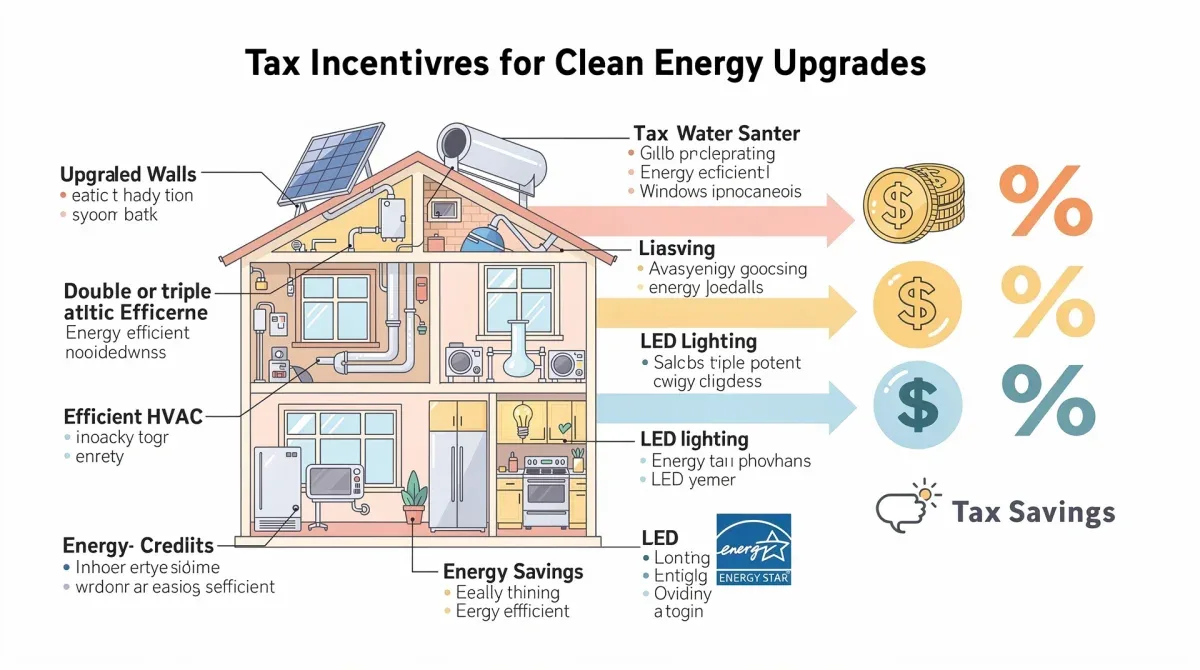
The range of home improvements eligible for the 30% Federal Clean Energy Tax Credit is quite broad, encompassing various upgrades designed to enhance energy efficiency and reduce reliance on fossil fuels. Understanding which specific improvements qualify is key to maximizing your potential deduction of up to $3,200. Generally, these include investments in renewable energy systems, such as solar panels and wind turbines, as well as energy-efficient components like insulation, windows, doors, and certain heating and cooling systems.
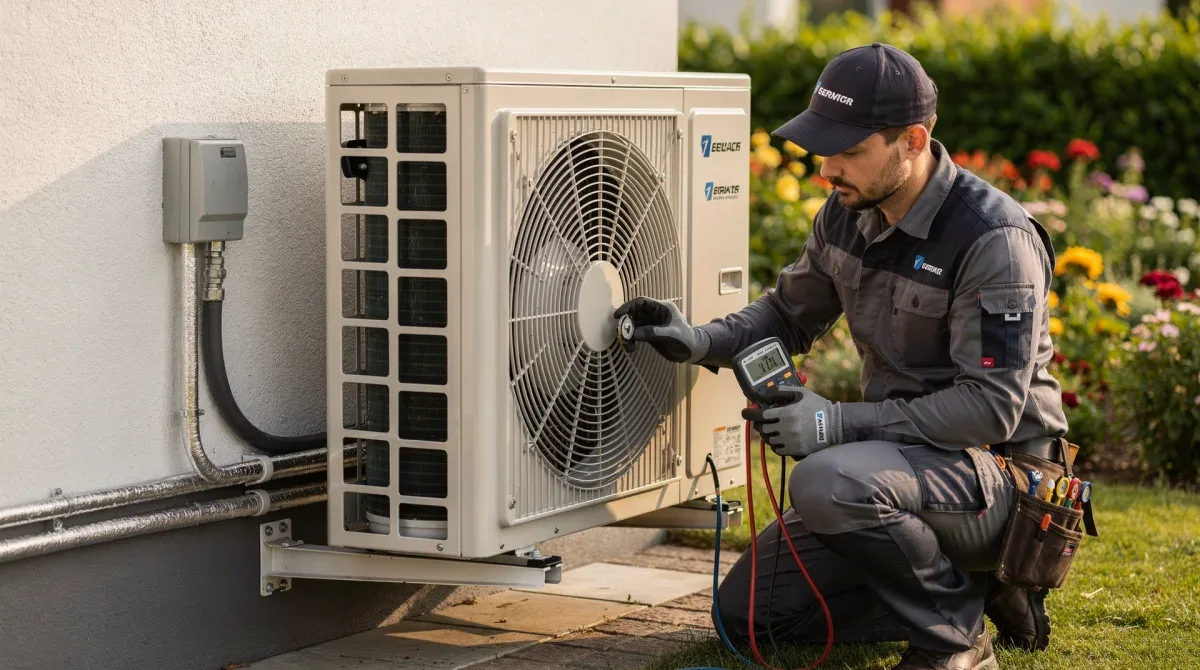
One of the most popular qualifying improvements is the installation of solar electricity generation equipment, often referred to as solar panels. These systems convert sunlight into electricity for your home, significantly reducing or even eliminating your utility bills. Another highly impactful upgrade is the installation of geothermal heat pumps, which use the earth's stable underground temperature to provide efficient heating and cooling for your home. These systems are known for their long-term savings and environmental benefits.
Specific eligible upgrades and their benefits
- Solar panels (photovoltaic systems): Convert sunlight into electricity, drastically cutting utility costs.
- Solar water heaters: Use solar energy to heat water, reducing energy consumption for water heating.
- Geothermal heat pumps: Highly efficient systems for heating and cooling, leveraging ground temperatures.
- Small wind turbines: Generate electricity from wind, suitable for properties with sufficient wind resources.
- Battery storage technology: Stores energy for later use, particularly beneficial with solar installations.
Beyond renewable energy systems, the credit also extends to improvements that enhance your home's thermal envelope and overall energy performance. This includes upgrades like new energy-efficient windows and doors, which minimize heat loss and gain, and insulation improvements, such as adding attic or wall insulation, which help maintain consistent indoor temperatures. High-efficiency central air conditioners, furnaces, and water heaters that meet specific energy efficiency ratings also qualify, offering immediate operational savings.

It is crucial to verify that any product or system you intend to install meets the specific energy efficiency criteria set by the IRS for 2026. Manufacturers and retailers often label their products with Energy Star ratings or other certifications that indicate eligibility. Consulting with a qualified contractor or energy auditor can help ensure that your chosen improvements not only qualify for the credit but also provide the best long-term energy savings for your home.
In essence, qualifying home improvements for the 30% Federal Clean Energy Tax Credit span a variety of energy-saving and renewable energy solutions. From solar installations to advanced insulation and HVAC systems, these upgrades offer significant financial incentives while contributing to a more sustainable home environment. Careful selection and documentation of these improvements are key to unlocking maximum savings.
Navigating the $3,200 annual deduction limit
While the 30% Federal Clean Energy Tax Credit is generous, it's important to understand the annual deduction limits to accurately plan your projects and expectations. For 2026, the credit allows for a maximum annual deduction of $3,200. This cap applies to the total amount of credit you can claim across all eligible home improvements made within a single tax year. It's not a per-project limit, but an aggregate limit, meaning if you install new windows and a heat pump in the same year, the combined credit for both cannot exceed $3,200.
This annual cap is designed to spread out the benefits of the credit over multiple years if a homeowner undertakes extensive, high-cost renovations. For instance, if you install a solar panel system costing $20,000, 30% of that would be $6,000. However, due to the $3,200 annual limit, you would claim $3,200 in the first year and carry forward the remaining $2,800 to subsequent tax years until the full credit is utilized, provided the credit remains available. This carryforward provision is a crucial aspect of the credit, allowing homeowners to benefit from larger investments over time.
Understanding credit limits and carryforward provisions
- Annual aggregate limit: $3,200 is the maximum credit for all eligible improvements in one year.
- Carryforward option: Unused credit can be carried forward to future tax years, subject to annual limits.
- Specific project limits: While the overall limit is $3,200, some specific categories of improvements may have their own sub-limits (e.g., $600 for windows or $2,000 for heat pumps), which contribute to the overall $3,200 cap.
It’s essential to be aware of these sub-limits as well. For example, there might be a cap of $600 for certain energy-efficient building envelope components like exterior windows, skylights, and exterior doors. Similarly, a separate $2,000 limit often applies to certain highly efficient items like electric or natural gas heat pumps, electric or natural gas central air conditioners, and natural gas or propane water heaters. These individual limits feed into the overall $3,200 annual cap. Planning your improvements strategically can help you maximize these various limits without exceeding the total annual deduction.
Navigating the $3,200 annual deduction limit requires careful planning and an understanding of both the overall cap and any specific sub-limits for individual improvements. The ability to carry forward unused credit is a significant advantage, ensuring that larger investments can still yield their full tax benefits over time. By being informed, homeowners can optimize their clean energy investments and secure substantial savings.
How to claim the clean energy tax credit on your 2026 tax return
Claiming the 30% Federal Clean Energy Tax Credit on your 2026 tax return involves a few straightforward steps, primarily centered around proper documentation and accurate form submission. The credit is typically claimed using IRS Form 5695, "Residential Energy Credits." This form allows you to calculate the total amount of credit you are eligible for based on your qualified expenses and any applicable limits. It's crucial to ensure that all information entered on this form is accurate and supported by your records.
Before you begin filling out Form 5695, gather all necessary documentation for your eligible improvements. This includes receipts for materials, invoices from contractors, and any manufacturer certifications or Energy Star labels for the products installed. These documents prove the cost of the improvements and their qualification for the credit. Keeping these records organized and accessible will greatly simplify the tax filing process and provide evidence if your return is ever questioned by the IRS.
Essential steps for filing your claim
- Collect all documentation: Keep receipts, invoices, and product certifications.
- Complete Form 5695: Use this specific IRS form to calculate your credit.
- Attach to Form 1040: Submit Form 5695 along with your main federal income tax return.
- Consult a tax professional: Consider seeking advice for complex situations or large investments.
When completing Form 5695, you will need to list the qualified energy efficiency improvement costs and the residential clean energy property costs separately. The form then guides you through the calculations, applying the 30% rate and factoring in any annual or per-item limits. Once calculated, the total credit from Form 5695 is then transferred to your Form 1040, reducing your overall tax liability directly. If your credit exceeds your tax liability for the year, remember the carryforward provision allows you to apply the unused portion to future tax years.
While the process is designed to be user-friendly, consulting with a qualified tax professional is highly recommended, especially if you have made multiple improvements, have complex financial situations, or are unsure about specific eligibility criteria. A tax advisor can help ensure you correctly identify all eligible expenses, accurately complete the forms, and maximize your credit while avoiding potential errors. Their expertise can provide peace of mind and help you navigate the nuances of tax law effectively.
In summary, claiming the clean energy tax credit involves meticulous documentation and correct form submission. By gathering all necessary records and accurately completing IRS Form 5695, homeowners can successfully reduce their tax burden. Seeking professional advice can further streamline this process, ensuring all eligible savings are realized for your 2026 tax return.
Long-term financial benefits and environmental impact
Investing in clean energy home improvements, supported by the 30% Federal Clean Energy Tax Credit, extends far beyond immediate tax savings. The long-term financial benefits are substantial, primarily through reduced utility bills. Energy-efficient windows, improved insulation, and high-efficiency HVAC systems significantly lower energy consumption for heating and cooling, translating into noticeable savings on a monthly basis. Similarly, solar panel installations can drastically cut electricity costs, potentially leading to near-zero energy bills over time.
Beyond direct savings, these improvements also increase your home's value. Energy-efficient homes are increasingly attractive to potential buyers, commanding higher resale prices and often selling faster than less efficient counterparts. This added value is a tangible return on your investment, making clean energy upgrades a smart financial decision for both the short and long term. Furthermore, the durability and reduced maintenance needs of many modern clean energy systems contribute to lower ownership costs over their lifespan.
Broader environmental contributions
- Reduced carbon footprint: Lower energy consumption directly translates to fewer greenhouse gas emissions.
- Decreased reliance on fossil fuels: Promoting renewable energy sources lessens demand for non-renewable resources.
- Improved air quality: Reduced emissions from power plants contribute to cleaner air.
- Sustainable living: Encourages a broader societal shift towards environmental responsibility.
The environmental impact of these investments is equally compelling. By reducing your home's energy consumption and opting for renewable sources, you significantly decrease your carbon footprint. This contributes to mitigating climate change, preserving natural resources, and promoting a healthier planet for future generations. Each kilowatt-hour saved or generated by clean energy means less reliance on fossil fuels, which are major contributors to air pollution and environmental degradation.
Moreover, the collective action of homeowners adopting clean energy technologies creates a ripple effect, driving innovation and expanding the clean energy market. This increased demand leads to further technological advancements and cost reductions, making clean energy even more accessible and affordable for everyone. The tax credit, therefore, serves as a catalyst for a broader societal shift towards sustainable practices, reinforcing a commitment to environmental stewardship.
In conclusion, the clean energy tax credit offers a dual benefit: significant long-term financial advantages through reduced utility bills and increased home value, coupled with a profound positive environmental impact. By embracing these improvements, homeowners not only save money but also contribute to a more sustainable and healthier future for all.
Planning your clean energy projects for 2026
Strategic planning is essential to maximize the benefits of the 30% Federal Clean Energy Tax Credit for your 2026 projects. Begin by conducting a thorough energy audit of your home. This can be done professionally or through DIY methods, identifying areas where energy is being lost and where improvements would yield the greatest return on investment. Prioritize projects that offer the most significant energy savings and align with your budget and long-term goals.
Consider the timing of your installations. To claim the credit on your 2026 tax return, all eligible improvements must be placed in service during that calendar year. This means installations should be completed and functional by December 31, 2026. Given potential lead times for materials and contractor availability, it's wise to start planning and scheduling your projects well in advance, ideally in late 2025 or early 2026, to avoid last-minute rushes and ensure completion within the tax year.
Key considerations for effective project planning
- Energy audit: Identify critical areas for improvement and prioritize projects.
- Budget allocation: Determine how much you can invest, considering the $3,200 annual credit limit.
- Contractor selection: Choose reputable, experienced contractors familiar with energy-efficient installations and tax credit requirements.
- Documentation strategy: Establish a system for organizing all receipts, invoices, and product information from the outset.
When selecting contractors, always seek multiple quotes and verify their credentials, licenses, and insurance. Ensure they are knowledgeable about the specific requirements for the clean energy tax credit and can provide documentation that supports your claim. A reputable contractor will be able to advise on eligible products and installation best practices, helping you avoid costly mistakes and ensuring your improvements meet the necessary standards for the credit.
Finally, consider the cumulative effect of multiple improvements. While the $3,200 annual cap applies, you might spread larger projects across several years to maximize the carryforward provision. For example, installing new windows one year and a solar panel system the next could allow you to claim the full credit over two tax cycles. This phased approach can be a smart way to manage costs and continually benefit from the tax incentives, transforming your home into an energy-efficient haven over time.
Effective planning for your 2026 clean energy projects involves an energy audit, careful budgeting, timely execution, and selection of qualified professionals. By following these steps, homeowners can strategically leverage the 30% Federal Clean Energy Tax Credit, making their homes more sustainable and financially rewarding for years to come.
| Key Point | Brief Description |
|---|---|
| Credit Amount | 30% of qualified clean energy home improvement costs. |
| Maximum Deduction | Up to $3,200 annually for eligible improvements. |
| Eligible Improvements | Solar, heat pumps, insulation, energy-efficient windows/doors. |
| Claiming Process | Use IRS Form 5695 with proper documentation. |
Frequently Asked Questions About the Clean Energy Tax Credit
What types of clean energy improvements qualify for the 30% tax credit?▼Many improvements qualify, including solar panels, solar water heaters, geothermal heat pumps, small wind turbines, and battery storage technology. Additionally, energy-efficient windows, doors, insulation, and certain high-efficiency HVAC systems are eligible, provided they meet specific energy performance standards set by the IRS for 2026.
Is there an income limit to claim the Federal Clean Energy Tax Credit?▼No, generally there are no income limitations to claim the Energy Efficient Home Improvement Credit. This makes the credit broadly accessible to homeowners regardless of their adjusted gross income, encouraging wider adoption of clean energy technologies across various financial demographics.
Can I carry over unused credit if my improvements exceed the $3,200 annual limit?▼Yes, if the 30% credit for your qualified improvements exceeds the $3,200 annual limit, you can carry forward the unused portion of the credit to subsequent tax years. This allows homeowners to fully benefit from larger investments over time, reducing future tax liabilities.
What documentation do I need to claim the credit on my 2026 tax return?▼You will need to retain all receipts, invoices, and any manufacturer certifications for the eligible products and services. These documents verify the cost of your improvements and their qualification. You will then use this information to complete IRS Form 5695 when filing your 2026 federal income tax return.
Does the credit apply to new construction homes or only existing homes?▼The Energy Efficient Home Improvement Credit primarily applies to improvements made to an existing primary residence. While some specific elements in new construction might qualify under other related credits, this particular credit is focused on upgrades to homes already built and occupied.
Conclusion
The 30% Federal Clean Energy Tax Credit offers an invaluable opportunity for homeowners in 2026 to significantly reduce their tax burden while simultaneously enhancing their homes' energy efficiency and environmental footprint. By understanding the eligibility criteria, identifying qualifying improvements, and meticulously planning your projects, you can deduct up to $3,200, realizing both immediate financial savings and long-term benefits through reduced utility costs and increased property value. This credit not only supports individual financial well-being but also contributes to a broader national effort towards a more sustainable and greener future. Embrace the opportunity to invest in your home and the planet, making informed decisions that pay dividends for years to come.