DOE Unveils Revised Student Loan Repayment Terms
Advertisements

The U.S. Department of Education has unveiled revised federal student loan repayment terms affecting roughly 8 million borrowers.
Aimed at simplifying repayment and offering relief, these major policy changes require immediate attention—here is a breakdown of key updates, eligibility criteria, and critical steps borrowers must take next.
Department of Education Unveils Revised Repayment Terms: An Overview
The Department of Education's recent announcement signals a significant shift in how federal student loans will be repaid. These revised policies are designed to offer greater flexibility and affordability for a substantial portion of the borrower population.
Officials state that the primary goal is to alleviate the financial burden on borrowers, particularly those struggling with high monthly payments or accumulating interest. The changes reflect ongoing efforts to address the broader student debt crisis in the United States.
The impact of these revised student loan repayment terms is expected to be far-reaching, directly influencing the financial stability of approximately 8 million federal student loan holders.
This move underscores the administration's commitment to supporting educational attainment without crippling debt.
Key Changes to Federal Student Loan Repayment
The revised repayment terms introduce several critical modifications to existing federal student loan programs. These updates focus on reducing monthly payments, simplifying income-driven repayment (IDR) plans, and providing pathways to faster loan forgiveness.
One of the most notable changes involves adjustments to the income-driven repayment calculations, making it easier for low-income borrowers to manage their payments. The Department of Education emphasizes that these changes are intended to be more equitable and responsive to borrowers' economic realities.
Furthermore, the new framework includes provisions for addressing accumulated interest and streamlining the process for borrowers to enroll in the most beneficial plans. These comprehensive changes aim to create a more sustainable and less burdensome repayment landscape.
Simplified Income-Driven Repayment Plans
The Department of Education is streamlining the array of existing income-driven repayment plans into a more cohesive and understandable structure. This simplification is expected to reduce confusion and increase enrollment among eligible borrowers.
Borrowers will find it easier to determine which plan best suits their financial situation, potentially leading to lower monthly payments and a clearer path to loan forgiveness. The goal is to ensure that more borrowers can access the relief they are entitled to.
Reduced discretionary income percentage for payments.
Shorter repayment periods for some borrowers.
Automatic enrollment for certain eligible individuals.
Interest Accrual and Forgiveness Enhancements
A significant component of the revised student loan repayment terms addresses the persistent issue of interest accrual. New provisions aim to prevent loan balances from growing due to unpaid interest, even when monthly payments are low.
Additionally, the Department of Education is enhancing forgiveness pathways, particularly for long-term borrowers and those in public service. These enhancements are designed to provide a tangible end in sight for individuals who have consistently made payments over many years.
These measures are a direct response to feedback from borrowers who have expressed frustration over rising loan balances despite diligent payments. The revised terms seek to make the promise of loan forgiveness more attainable and impactful.
Who is Affected by the New Repayment Terms?
The impact of the Department of Education Unveils Revised Repayment Terms for Federal Student Loans Affecting 8 Million Borrowers is broad, directly touching a substantial segment of the federal student loan population.
Eligibility for these new benefits will depend on several factors, including loan type and income level.
Borrowers with Direct Loans and certain Federal Family Education Loan (FFEL) Program loans held by the Department of Education are primarily the focus of these changes. Private student loans are not included in this federal initiative.
It is critical for all federal student loan borrowers to review their specific loan types and current repayment statuses to understand how these revisions might apply to them. The Department encourages proactive engagement to ensure maximum benefit.
Eligibility Criteria and Loan Types
The new student loan repayment terms largely target borrowers with federal Direct Loans, which constitute the majority of outstanding federal student debt. Certain FFEL Program loans may also qualify if consolidated into a Direct Consolidation Loan.
Borrowers currently enrolled in existing IDR plans, or those who could benefit from them, are particularly encouraged to assess the new options. The revised criteria aim to expand access to more affordable repayment solutions.

The Department of Education has provided clear guidelines on which loans are eligible and how borrowers can confirm their status. Understanding these distinctions is the first step toward leveraging the new repayment opportunities.
Navigating the Application Process and Deadlines
For many borrowers, understanding the revised student loan repayment terms will necessitate navigating a new application or enrollment process. The Department of Education aims to make this transition as smooth as possible, offering resources and guidance.
While some changes may be applied automatically, many borrowers will need to take proactive steps to enroll in new or updated repayment plans. Awareness of deadlines and required documentation is paramount to securing benefits.
Official communication channels from the Department of Education and loan servicers will be crucial for disseminating accurate information. Borrowers are advised to monitor these sources closely for personalized instructions.
Steps for Current and New Borrowers
Current borrowers in existing repayment plans should review their options to see if a switch to the new terms would be more advantageous. This may involve contacting their loan servicer or utilizing the Federal Student Aid website.
New borrowers entering repayment will automatically be considered for the most beneficial plans based on their financial information. However, proactive engagement remains key to ensuring optimal outcomes.
Check your loan type and eligibility on StudentAid.gov.
Contact your loan servicer for personalized advice.
Submit any required applications or documentation promptly.
Potential Impact on Borrowers and the Economy
The Department of Education Unveils Revised Repayment Terms for Federal Student Loans Affecting 8 Million Borrowers, a move that carries significant implications not only for individual finances but also for the broader economy.
Reduced student loan burdens could stimulate consumer spending and economic growth.
Borrowers freed from crushing monthly payments may have more disposable income, potentially leading to increased investments in housing, small businesses, or other significant life events. This ripple effect could provide a boost to various sectors of the economy.
However, the long-term fiscal impact of these changes on federal budgets and future student aid programs will be closely monitored. Policymakers will be evaluating the balance between borrower relief and sustainable government spending.
Economic Ripple Effects
Experts anticipate that a reduction in student loan stress could lead to improved credit scores for many borrowers, facilitating access to other forms of credit like mortgages and auto loans. This could invigorate housing and automotive markets.
Furthermore, alleviating student debt may encourage entrepreneurship and innovation, as individuals feel more financially secure to take risks. This could foster job creation and contribute to a more dynamic economy.
The Department of Education's efforts to revise student loan repayment terms are therefore not just about individual relief, but also about fostering broader economic resilience and opportunity across the nation.
Addressing Common Concerns and Misconceptions
With any major policy change, especially one as impactful as the Department of Education Unveils Revised Repayment Terms for Federal Student Loans Affecting 8 Million Borrowers, questions and misconceptions are bound to arise.
Clear communication is essential to prevent confusion and ensure borrowers make informed decisions.
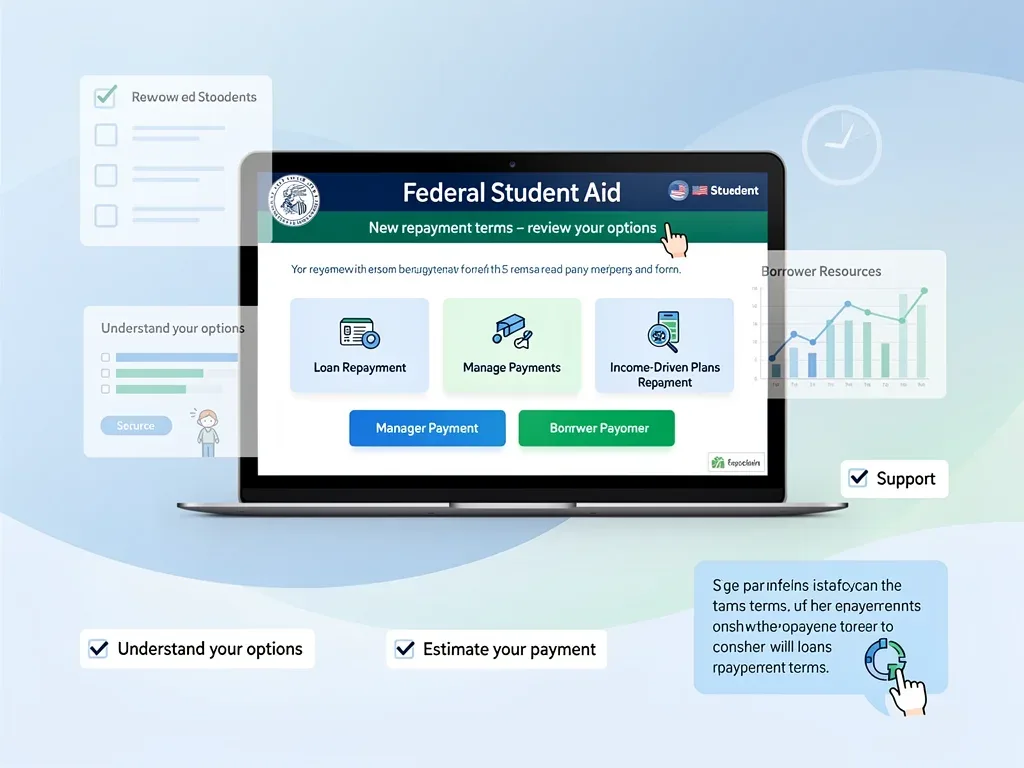
One common concern revolves around the complexity of different repayment plans and how to choose the best option. The Department of Education is working to simplify this process through enhanced online tools and direct communication.
Another area of focus is clarifying the eligibility for loan forgiveness and the exact timeline for receiving such benefits. Transparency in these areas is crucial for building trust and ensuring borrowers understand their full entitlements.
Dispelling Myths and Providing Clarity
It is important to differentiate between federal student loans and private student loans, as the new terms apply exclusively to the former. Misinformation regarding this distinction can lead to incorrect expectations for borrowers.
Additionally, some borrowers may be confused about whether they need to reapply for existing IDR plans or if their current status will automatically update. The Department emphasizes that while some updates are automatic, proactive steps are often required.
The Department of Education is actively working to provide clear, concise information through its official channels to address these and other common misconceptions. Borrowers are encouraged to consult official sources directly.
Future Outlook and Ongoing Monitoring
The implementation of the revised student loan repayment terms will be an ongoing process, with the Department of Education committed to monitoring their effectiveness and making further adjustments as needed. This iterative approach aims to ensure the policies achieve their intended goals.
Borrowers should anticipate continued updates and resources from federal student aid offices and their loan servicers. Staying informed will be key to adapting to any future developments or refinements of the new terms.
The long-term success of these repayment revisions will depend on a combination of effective implementation, borrower engagement, and continuous evaluation of their impact on individuals and the broader economy. The Department of Education remains dedicated to this extensive undertaking.
What Borrowers Should Monitor Next
Borrowers should regularly check the Federal Student Aid website (StudentAid.gov) for the latest information and tools related to the new repayment plans. This platform will be the primary source for official guidance and updates.
Keeping an eye on communications from their specific loan servicer is also vital, as servicers will provide personalized details regarding account changes and enrollment options. Do not disregard official notices.
Official announcements from the Department of Education.
Updates from your federal student loan servicer.
Changes to eligibility criteria or application processes.
Key Aspect | Description of Change |
|---|---|
Eligibility Expansion | More borrowers qualify for lower monthly payments under revised IDR plans. |
Payment Calculations | Discretionary income percentage for payments has been reduced. |
Interest Accrual | New provisions aim to prevent loan balances from growing due to unpaid interest. |
Loan Forgiveness | Streamlined pathways and shorter timelines for certain forgiveness programs. |
Frequently Asked Questions About New Student Loan Repayment Terms
What are the most significant changes to federal student loan repayment terms?▼
The most significant changes include a reduction in the percentage of discretionary income used for monthly payments, enhanced interest accrual protections, and simplified pathways to loan forgiveness. These revisions aim to make repayment more manageable for millions of federal borrowers.
How many borrowers will be affected by these revised repayment terms?▼
Approximately 8 million federal student loan borrowers are expected to be directly impacted by the Department of Education Unveils Revised Repayment Terms for Federal Student Loans Affecting 8 Million Borrowers. This includes those currently in repayment and those entering it soon.
Are private student loans included in the Department of Education's new terms?▼
No, the revised repayment terms apply exclusively to federal student loans. Private student loans are issued by banks and other financial institutions and are not subject to the Department of Education's policies or programs.
Do I need to reapply for an income-driven repayment plan under the new rules?▼
While some changes may be applied automatically, many borrowers will need to take proactive steps to enroll in the new or updated repayment plans. It is crucial to check with your loan servicer or the Federal Student Aid website for personalized guidance.
Where can I find official information about the new student loan repayment terms?▼
The most reliable source for official information is the Federal Student Aid website (StudentAid.gov). Your federal student loan servicer will also provide direct communications regarding how these changes affect your specific loans and repayment options.
What Happens Now
The Department of Education's unveiling of revised student loan repayment terms marks a significant policy shift.
Borrowers should prioritize understanding how these changes specifically apply to their federal student loans, particularly as deadline windows approach—as detailed in Forbes' analysis on why some student loan borrowers must switch plans by next week.
Staying informed through official channels and engaging with loan servicers will be crucial to maximizing the benefits offered by these new provisions. This initiative represents a substantial effort to reform federal student aid and provide meaningful relief to millions of Americans.