Prior Learning Assessments: Convert Work Experience to College Credit
Advertisements
Prior learning assessments allow adult learners to gain college credit for knowledge and skills acquired through work experience, military service, or professional training, potentially earning up to 30 credit hours and significantly shortening their path to a degree.
Are you an adult learner with years of valuable experience but no college degree? The concept of prior learning assessments (PLAs) offers a transformative pathway, enabling you to convert your professional and life experiences into legitimate college credit, potentially earning up to 30 credit hours this year.
Understanding prior learning assessments (PLAs)
Prior learning assessments, often abbreviated as PLAs, represent a systematic process designed to evaluate and award college credit for knowledge and skills adult learners have gained outside of traditional academic settings. This can include professional work experience, military training, volunteer work, independent study, or even significant life experiences. The fundamental idea behind PLAs is that learning is learning, regardless of where or how it was acquired. It acknowledges that many adults possess college-level competencies that deserve formal recognition.
For adult learners, PLAs offer a critical advantage: the ability to accelerate degree completion, reduce tuition costs, and avoid redundant coursework. Instead of sitting through introductory courses on subjects they've mastered in the workplace, individuals can demonstrate their existing knowledge and move directly to more advanced studies. This not only saves time and money but also validates their extensive practical experience, boosting confidence and motivation.
What counts as prior learning?
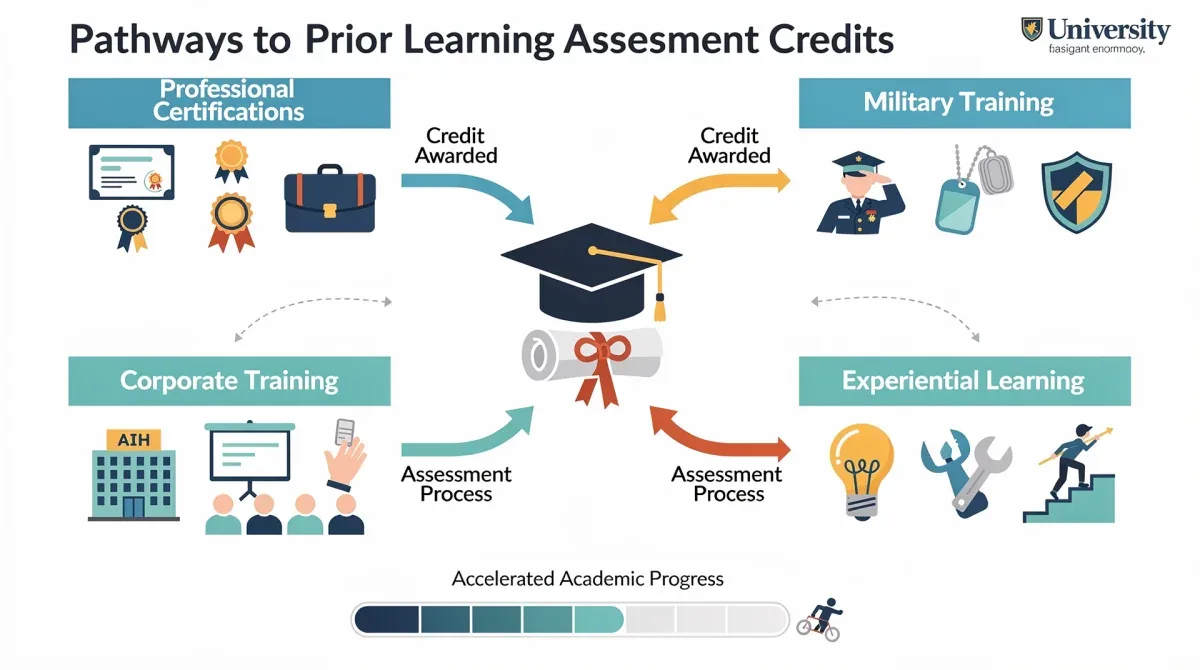
Many forms of non-traditional learning can be eligible for PLA credit. It's not just about what you did, but what you learned and how that learning aligns with college-level courses. Common examples include:
- Work Experience: Skills developed through job roles, such as project management, marketing, financial analysis, or technical proficiencies.
- Military Training: Formal courses and experiences gained during service often have direct college credit equivalents.
- Professional Certifications and Licenses: Credentials from industry bodies or professional organizations that demonstrate mastery of a specific field.
- Independent Study and Volunteer Work: Structured learning or significant responsibilities undertaken in community service roles.
The key is to demonstrate that the learning acquired is equivalent in scope, depth, and rigor to college-level coursework offered by the institution. This requires thoughtful reflection and careful documentation, which are central to the PLA process.
In essence, prior learning assessments provide a bridge between real-world expertise and academic credentials, empowering adult learners to leverage their life's work towards a brighter educational future. It's a recognition that education isn't confined to the classroom walls but is a continuous journey of growth and development.
The benefits of converting work experience into college credit
Converting your work experience into college credit through prior learning assessments offers a multitude of advantages for adult learners. These benefits extend beyond just financial savings, impacting academic progression, career advancement, and personal growth. Understanding these upsides can be a powerful motivator for pursuing PLAs.
Accelerated degree completion
One of the most compelling benefits is the acceleration of your degree program. By earning credit for what you already know, you can significantly reduce the number of courses you need to take. This means you can graduate sooner, often saving months or even years. For busy adults balancing work, family, and studies, this time-saving aspect is invaluable, allowing them to achieve their educational goals without putting their lives on hold indefinitely.

Imagine cutting a four-year degree down to three, or even two and a half, simply by validating existing knowledge. This expedited path not only brings the finish line closer but also keeps momentum high, reducing the risk of burnout or dropping out due to prolonged study periods. The ability to see tangible progress quickly is a significant psychological boost.
Significant cost savings
College tuition and fees represent a substantial investment. Every credit hour earned through a PLA is a credit hour you don't have to pay for. Considering that many adult learners aim for 30 credit hours – roughly a full year of college – the financial savings can be immense. This can translate to thousands of dollars, making higher education more accessible and less burdensome.
- Reduced Tuition: Fewer courses mean lower overall tuition costs.
- Lower Fees: Associated fees for courses, such as lab fees or technology fees, are also avoided.
- Opportunity Cost: Graduating sooner means you can potentially advance in your career faster, leading to quicker salary increases and better job opportunities.
These financial benefits are not just about saving money; they are about smarter investment in your future, ensuring that your educational journey is as efficient and economical as possible.
Types of prior learning assessments
Prior learning assessments aren't a one-size-fits-all solution; rather, they encompass several distinct methodologies for evaluating an adult learner's knowledge and skills. Each type caters to different forms of prior learning and academic requirements. Understanding these options is crucial for choosing the most appropriate path to credit.
Portfolio assessment
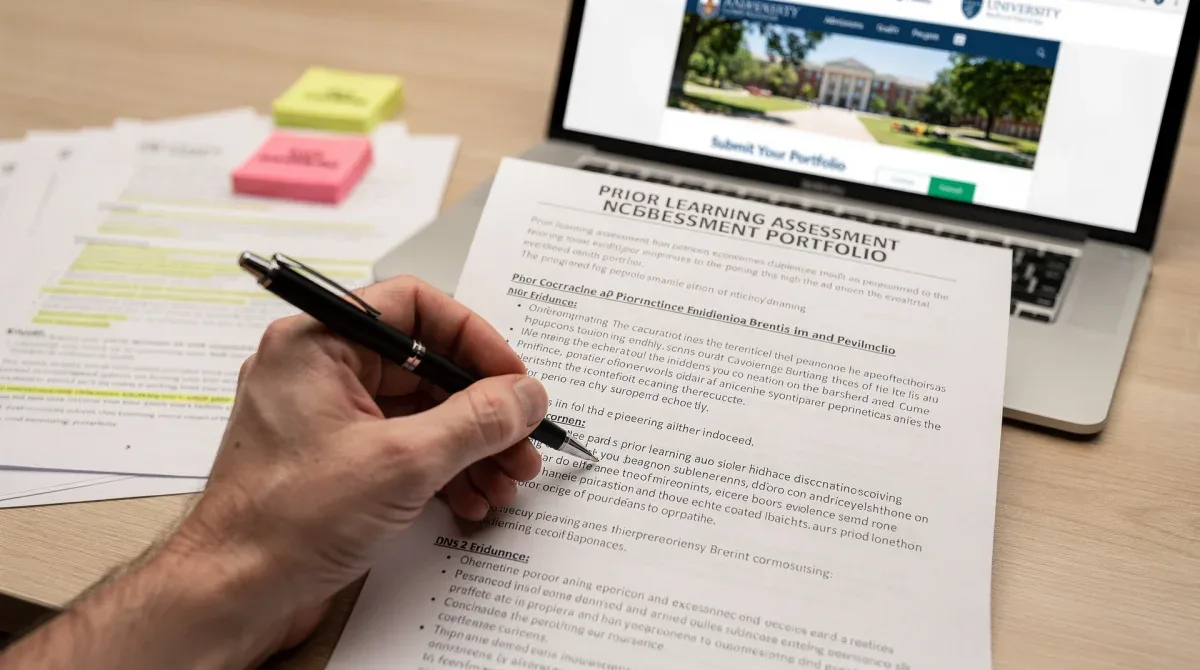
The portfolio assessment is perhaps the most comprehensive and widely recognized PLA method. It involves the learner compiling a detailed collection of documents, narratives, and evidence that demonstrates college-level learning derived from their experiences. This portfolio acts as a persuasive argument, linking specific life or work experiences to the learning outcomes of particular college courses.
A typical portfolio might include:
- A reflective essay detailing the learning experience.
- Work samples, such as reports, presentations, or project plans.
- Letters of recommendation from supervisors or colleagues.
- Certificates of training, job descriptions, or performance reviews.
The portfolio is then evaluated by faculty experts in the relevant subject area, who assess whether the demonstrated learning meets the academic standards for college credit. This method is particularly effective for highly individualized or interdisciplinary learning experiences that don't fit neatly into standardized tests.
Standardized examinations
For certain subjects, standardized examinations offer a direct way to demonstrate proficiency. These tests are designed to assess college-level knowledge in specific academic areas. The most common examples include:
- CLEP (College-Level Examination Program) Exams: Offered by the College Board, CLEP exams cover a wide range of subjects, from history and literature to mathematics and natural sciences.
- DSST (DANTES Subject Standardized Tests) Exams: Originally designed for military personnel, DSSTs are now available to civilians and cover subjects often found in undergraduate curricula.
- Excelsior College Examinations (ECE): These exams are developed by Excelsior College and are accepted by many institutions to grant credit for college-level knowledge.
These exams provide a clear, objective measure of knowledge and are often a quicker route to earning credit if your learning aligns well with the test's content. Many institutions publish lists of which CLEP or DSST exams they accept and the minimum scores required for credit.
Other assessment methods
Beyond portfolios and standardized tests, other PLA methods exist, though they might be less common or more institution-specific:
- Evaluations of Non-Collegiate Training: Many colleges accept credit recommendations from organizations like the American Council on Education (ACE), which evaluates corporate and military training programs for college credit equivalency.
- Departmental Challenge Exams: Some academic departments offer their own exams for students to challenge specific courses.
- Credit for Professional Certifications/Licenses: Direct credit may be awarded for certain industry-recognized certifications or professional licenses, provided they meet specific academic criteria.
Each PLA method has its strengths, and the best approach often depends on the nature of your prior learning, the specific degree program you're pursuing, and the policies of your chosen institution. Exploring all available options can maximize your credit potential.
The process: converting experience to credit
Embarking on the journey to convert your work experience into college credit involves a structured process, typically guided by your chosen educational institution. While specific steps may vary slightly from one college to another, the general framework remains consistent. Navigating this process effectively requires careful planning, thorough documentation, and clear communication.
Initial consultation and eligibility
The first step is usually to consult with an academic advisor or a dedicated prior learning assessment coordinator at your college. During this initial meeting, you will discuss your educational goals, your relevant work and life experiences, and the types of credit you hope to earn. The advisor will help you understand the institution's PLA policies, including credit limits, acceptable assessment methods, and associated fees.
It's crucial at this stage to be open and honest about your experiences. Bring any existing documentation, such as resumes, job descriptions, or certificates, to help the advisor gauge your potential eligibility. This consultation helps determine if PLAs are a viable option for you and which assessment methods would be most appropriate.
Developing your portfolio or preparing for exams
Once eligibility is confirmed, the next phase involves actively preparing your assessment. If you opt for a portfolio assessment, you will begin compiling your evidence. This is a highly reflective process where you connect your experiences to specific learning outcomes of college courses. You'll often need to write detailed narratives, gather supporting documents, and organize them in a clear, compelling manner. Many institutions offer workshops or courses specifically designed to guide students through portfolio development, which can be immensely helpful.
If standardized exams are your chosen route, preparation will involve studying for the relevant CLEP, DSST, or departmental tests. Resources such as study guides, practice tests, and online courses are available to help you prepare effectively for these examinations. The goal is to demonstrate a level of knowledge equivalent to a student who has successfully completed the corresponding college course.
Submission and evaluation
After preparing your portfolio or taking your exams, the next step is formal submission. Portfolios are typically submitted to the PLA office, which then forwards them to faculty members who are experts in the subject matter for evaluation. These faculty evaluators will review your documentation against the learning objectives of the course for which you are seeking credit.
For standardized exams, your scores will be sent directly to the institution. The college will then evaluate these scores against their established credit-granting policies. In both cases, the evaluation process ensures that the credit awarded is academically sound and aligns with the institution's standards. Upon successful evaluation, the credits are officially posted to your academic transcript, bringing you closer to your degree.
Maximizing your credit potential: Tips for adult learners
Successfully converting your work experience into college credit requires more than just having valuable experience; it demands strategic planning and diligent execution. Adult learners can significantly maximize their credit potential by approaching prior learning assessments (PLAs) with a proactive and informed mindset. Here are key strategies to consider.
Identify relevant experiences and skills
The first crucial step is a thorough self-assessment of your professional and life experiences. Don't just list your job titles; delve deeper into the specific skills you've acquired and the knowledge you've gained in each role. Think about projects you've managed, problems you've solved, technologies you've mastered, or leadership roles you've undertaken. Consider how these experiences align with college-level subjects such as:
- Project management principles
- Business communication
- Marketing strategies
- Data analysis
- Software development
- Human resource management
Many adult learners underestimate the academic equivalence of their practical skills. A detailed inventory of your competencies will be the foundation for identifying potential credit opportunities. Keep a running log of accomplishments and the learning derived from them.
Gather comprehensive documentation
Evidence is paramount in prior learning assessments. The more robust and organized your documentation, the stronger your case for credit will be. Start collecting everything that can validate your claims:
- Official job descriptions and performance reviews.
- Certificates from professional development courses or workshops.
- Work samples (reports, presentations, code, marketing materials).
- Letters of recommendation from supervisors or clients.
- Transcripts from military service or other training programs.
- Any awards or recognitions received.
Organize these documents systematically, perhaps by subject area or chronological order. This preparation will streamline the portfolio development process and provide evaluators with a clear picture of your capabilities.
Engage with your PLA advisor
Your prior learning assessment advisor is an invaluable resource. They are experts in the institution's PLA policies and can guide you through every step of the process. Don't hesitate to ask questions, seek feedback on your portfolio drafts, and clarify any uncertainties. Regular communication with your advisor can help you:
- Understand specific credit requirements for your degree.
- Identify the most appropriate PLA methods for your experiences.
- Refine your portfolio to meet academic standards.
- Navigate any administrative hurdles.
Their guidance can significantly increase your chances of successfully converting your prior learning into meaningful college credit. Leveraging their expertise is one of the smartest moves an adult learner can make in this process.
Overcoming common challenges in PLAs
While prior learning assessments offer significant advantages, adult learners may encounter several challenges during the process. Anticipating these hurdles and knowing how to address them can make the journey smoother and more successful. Proactive strategies are key to navigating the complexities of converting experience into academic credit.
Translating experience into academic language
One of the most frequent challenges is articulating practical, real-world experience in the formal language of academia. Many adult learners excel in their professions but struggle to describe their skills and knowledge in terms of course learning objectives, theories, or academic concepts. This gap can make it difficult for faculty evaluators to recognize the college-level equivalence of their learning.
To overcome this, focus on:
- Using Course Syllabi: Obtain syllabi for the courses you wish to challenge. Use the learning objectives and content descriptions as a guide to frame your experiences.
- Focusing on 'How' and 'Why': Instead of just stating what you did, explain how you did it, the principles you applied, and why certain decisions were made. This demonstrates deeper understanding.
- Seeking Guidance: Work closely with your PLA advisor or participate in portfolio development workshops. These resources often provide templates and examples to help bridge the language gap.
The goal is to demonstrate not just competence, but also a theoretical understanding that underpins your practical skills.
Gathering sufficient evidence
Another common hurdle is compiling enough credible evidence to support your claims. Over time, documents like old job descriptions, performance reviews, or project reports might be lost or become difficult to retrieve. Without strong supporting evidence, even valid learning experiences may not be awarded credit.
To mitigate this:
- Start Early: Begin gathering documents as soon as you decide to pursue PLAs.
- Think Broadly: Consider various types of evidence, including letters from supervisors, client testimonials, publications, or even verifiable online portfolios.
- Create New Evidence if Necessary: If official documents are scarce, consider creating new evidence, such as detailed project summaries or reflective essays specifically tailored to course objectives.
Persistence in evidence collection is crucial. Remember that the evaluators need tangible proof to make an informed decision about credit equivalency.
Institutional policies and limitations
Each educational institution has its own set of policies regarding prior learning assessments. These policies can vary significantly in terms of the maximum number of PLA credits accepted, the types of assessments offered, and the specific courses eligible for credit. This variability can sometimes be a source of frustration for adult learners, especially if they have specific credit goals in mind.
To navigate institutional differences:
- Research Thoroughly: Before applying, carefully research the PLA policies of potential colleges.
- Ask Specific Questions: During initial consultations, inquire about credit limits, which departments are most open to PLAs, and any course-specific restrictions.
- Be Flexible: While you may have a target number of credits, be prepared to adjust your expectations based on institutional policies.
Understanding and adapting to the specific academic environment is key to a successful PLA experience. By addressing these challenges head-on, adult learners can significantly increase their chances of earning valuable college credit for their rich life and work experiences.
Future trends in prior learning assessments
The landscape of education is constantly evolving, and prior learning assessments are no exception. As the workforce continues to change and the demand for lifelong learning grows, PLAs are becoming an increasingly vital component of higher education. Understanding these emerging trends can help adult learners prepare for future opportunities and navigate the evolving educational environment.
Increased adoption and integration
One of the most significant trends is the growing recognition and integration of PLAs across a wider range of institutions. Colleges and universities are increasingly seeing the value in recognizing non-traditional learning, not just for adult students but also for their own institutional diversity and enrollment goals. More state systems and individual institutions are developing robust PLA programs, making it easier for adult learners to find pathways to credit.
This increased adoption is driven by several factors:
- Demographic Shifts: A larger proportion of college students are now adult learners with significant work experience.
- Workforce Demands: The rapid pace of technological change requires continuous upskilling and reskilling, making flexible credit options essential.
- Affordability Concerns: PLAs offer a cost-effective way to earn a degree, aligning with national efforts to make higher education more accessible.
As more institutions embrace PLAs, adult learners will find more consistent and streamlined processes, reducing the current variability in policies and procedures.
Leveraging technology for assessment
Technology is set to play an even larger role in the future of prior learning assessments. Digital portfolios, AI-powered evaluation tools, and online platforms for submitting evidence are already emerging and will become more sophisticated. These technological advancements can make the PLA process more efficient, scalable, and accessible for both learners and evaluators.
- Digital Portfolio Platforms: Online tools that simplify the creation, organization, and submission of portfolios.
- Badging and Micro-credentials: A growing focus on recognizing specific skills and competencies through digital badges, which can then be stacked or evaluated for broader college credit.
- AI-Assisted Evaluation: While human faculty review will remain crucial, AI could assist in initial screening of evidence or identifying potential credit matches, speeding up the process.
These technological innovations aim to reduce administrative burdens, provide quicker feedback, and standardize aspects of the evaluation process, making PLAs more attractive and manageable for a larger audience.
Focus on competency-based education
The rise of competency-based education (CBE) models perfectly complements the philosophy of prior learning assessments. CBE focuses on what students know and can do, rather than on the time spent in a classroom. This shift in educational paradigm naturally aligns with PLAs, which are inherently about assessing demonstrated competencies regardless of how they were acquired.
In a CBE framework, PLAs become a foundational element, allowing learners to prove mastery of competencies through various means, including work experience, and then progress through their degree at their own pace. This future integration promises a more flexible, personalized, and efficient educational experience for adult learners, where their prior achievements are not just recognized but are central to their academic journey.
| Key Aspect | Brief Description |
|---|---|
| What are PLAs? | Methods to earn college credit for knowledge gained outside traditional classrooms, like work experience. |
| Key Benefits | Accelerates degree completion, saves tuition costs, and validates professional experience. |
| Assessment Types | Includes portfolio assessments, standardized exams (CLEP, DSST), and evaluation of non-collegiate training. |
| Maximizing Credit | Identify relevant skills, gather comprehensive documentation, and engage with PLA advisors. |
Frequently asked questions about prior learning assessments
What is the maximum number of credits I can earn through PLAs?▼The maximum number of credits varies significantly by institution, but many colleges allow adult learners to earn up to 30 credit hours, equivalent to a full year of college. Some institutions may even accept more, depending on their specific policies and your documented learning.
Do all colleges accept prior learning assessment credits?▼No, not all colleges accept PLA credits, and acceptance policies can differ greatly. It's crucial to research and confirm the specific PLA policies of any institution you are considering. Always speak with an admissions counselor or PLA coordinator before applying.
How long does the PLA process typically take?▼The duration of the PLA process can vary widely. Standardized exams often provide immediate or rapid results. Portfolio assessments, however, can take several weeks or even months to complete, depending on the complexity of your experience and the institution's evaluation schedule.
Are there fees associated with prior learning assessments?▼Yes, there are typically fees associated with PLAs. These can include administrative fees for portfolio review, costs for taking standardized exams, or fees for evaluating transcripts from non-collegiate training programs. While there are costs, they are generally much lower than traditional tuition fees.
Can military experience be converted into college credit?▼Absolutely. Military experience is often highly valued for PLA credits. Organizations like the American Council on Education (ACE) evaluate military training and experience for college credit equivalency, and many colleges readily accept these recommendations. Veterans should inquire about specific policies.
Conclusion
Prior learning assessments represent a powerful, often underutilized, tool for adult learners seeking to complete a college degree. By strategically converting valuable work and life experiences into academic credit, individuals can significantly shorten their time to graduation, reduce educational expenses, and affirm the college-level competencies they already possess. The path involves understanding the various assessment types, diligently preparing documentation, and actively engaging with institutional advisors. While challenges may arise in translating practical knowledge into academic terms or gathering sufficient evidence, the benefits of PLAs—accelerated degree completion, substantial cost savings, and enhanced career prospects—make it a worthwhile endeavor. As educational trends continue to evolve towards greater flexibility and competency-based models, prior learning assessments will only grow in importance, empowering more adult learners to achieve their academic and professional aspirations.