Medicare Part B: Critical 60-Day Deadlines & Penalties
Advertisements
Navigating Critical 60-Day Deadlines for Medicare Part B Enrollment to Avoid Permanent Late Penalties is essential for eligible individuals. Missing these crucial periods can result in lifelong higher premiums and significant financial burdens. This report details the key enrollment windows, explains how penalties accrue, and provides actionable steps to ensure timely enrollment for beneficiaries across the United States.
Critical 60-Day Deadlines for Medicare Part B Enrollment to Avoid Permanent Late Penalties is shaping today’s agenda with new details released by officials and industry sources. This update prioritizes what changed, why it matters and what to watch next, in a straightforward news format.
For many Americans approaching or already eligible for Medicare, understanding the precise enrollment periods for Part B is paramount. Overlooking these specific windows, particularly the critical 60-day deadlines, can lead to financial repercussions that last a lifetime.
The Centers for Medicare & Medicaid Services (CMS) consistently stresses the importance of timely enrollment to avoid permanent late enrollment penalties. These penalties are not a one-time fee but rather an increase in monthly premiums for as long as one has Medicare Part B coverage.
This report delves into the intricacies of these deadlines, offering clarity on the various enrollment periods and detailing the mechanisms through which penalties are assessed. It aims to equip beneficiaries with the knowledge needed to make informed decisions and secure their healthcare coverage without unnecessary costs.
Authorities confirmed new timelines and outlined initial impacts across different regions. Statements from representatives indicate short-term adjustments and a more defined path for upcoming decisions.
Understanding Medicare Part B Enrollment Periods
Medicare Part B, which covers medically necessary services like doctor's visits, outpatient care, and some preventive services, has specific enrollment periods. Missing these can result in significant financial penalties that continue for the duration of one's Part B coverage.

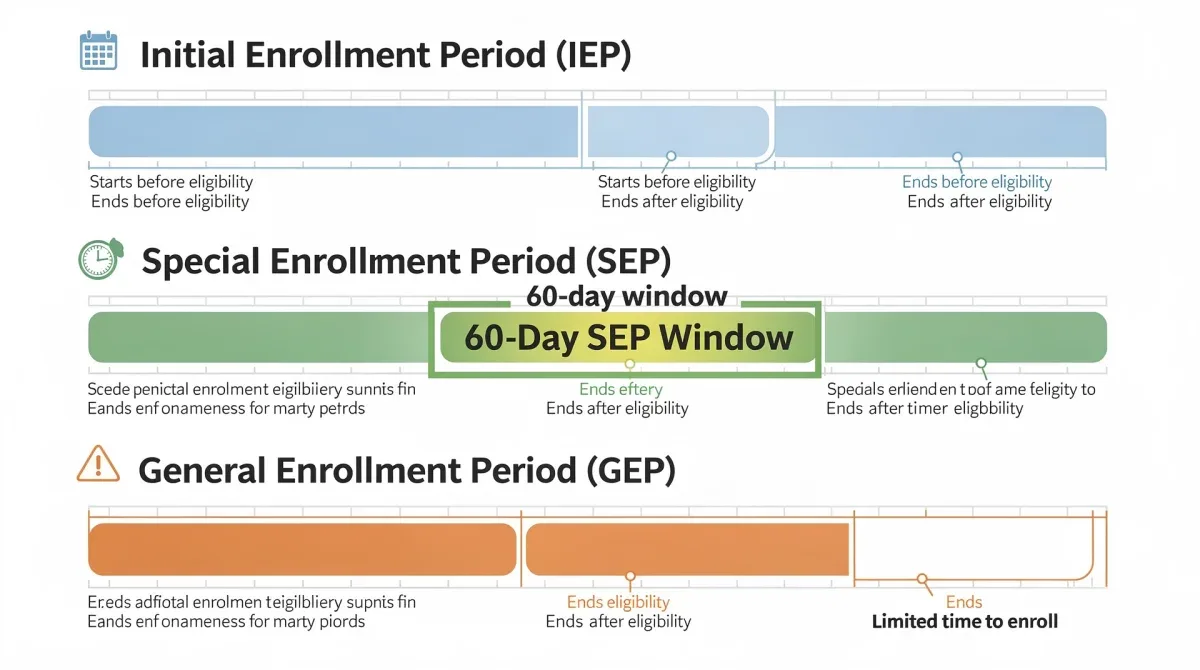
The primary enrollment windows include the Initial Enrollment Period (IEP), the Special Enrollment Period (SEP), and the General Enrollment Period (GEP). Each period serves a distinct purpose and is governed by strict timelines that beneficiaries must adhere to.
Understanding the nuances of each period is crucial to avoid the permanent late enrollment penalties associated with Medicare Part B. These penalties are designed to encourage timely enrollment and prevent individuals from waiting until they are sick to sign up.
The Initial Enrollment Period (IEP)
The IEP is a seven-month window that begins three months before an individual's 65th birthday, includes the month of their 65th birthday, and extends three months after. This is the first opportunity for most people to enroll in Medicare Part B without penalty.
Enrolling during the IEP ensures coverage starts promptly, typically on the first day of the month after you enroll, if you sign up in the three months before your birthday month. Delays within this period can push back your coverage start date.
Failure to enroll during this initial period can trigger late enrollment penalties unless a Special Enrollment Period applies. It is vital for individuals to mark their calendars and understand this foundational enrollment window.
Special Enrollment Periods (SEPs)
Special Enrollment Periods are designed for individuals who delay Part B enrollment due to specific circumstances, most commonly because they or their spouse are still working and have group health coverage through an employer or union. These SEPs are critical to avoiding late penalties.
The most common SEP allows individuals to enroll in Part B anytime while they are covered by a group health plan based on current employment, or during the eight-month period that begins the month after the employment ends or the group health plan coverage ends, whichever comes first.
Crucially, the Critical 60-Day Deadlines for Medicare Part B Enrollment to Avoid Permanent Late Penalties often refer to the window after certain life events or coverage changes. Missing the 60-day deadline within an SEP can lead to penalties.
- Employment termination or reduction in hours.
- Loss of employer-sponsored group health coverage.
- Moving outside the service area of a current plan.
It is imperative for individuals who qualify for an SEP to act swiftly within the specified timeframe to prevent incurring penalties. Documentation of continuous coverage is often required.
The General Enrollment Period (GEP) and Its Implications
For those who miss their Initial Enrollment Period and do not qualify for a Special Enrollment Period, the General Enrollment Period (GEP) is their next opportunity to enroll in Medicare Part B. However, enrolling during the GEP comes with significant drawbacks.
The GEP runs from January 1 to March 31 each year, with coverage beginning on July 1 of that same year. This delay in coverage can leave individuals uninsured for several months, which is a considerable risk.
Furthermore, enrolling during the GEP almost always results in permanent late enrollment penalties. This underscores why understanding and adhering to the Critical 60-Day Deadlines for Medicare Part B Enrollment to Avoid Permanent Late Penalties is so important.
How Late Enrollment Penalties Are Calculated
The late enrollment penalty for Medicare Part B is an additional 10% for each full 12-month period you could have had Part B but didn't sign up. This penalty is added to your monthly premium for the rest of your life.
For instance, if you wait two full years to enroll after your Initial Enrollment Period ends and you don't have a qualifying SEP, your Part B premium will be 20% higher than the standard premium. This compounding effect makes early enrollment financially advantageous.
The calculation is based on the number of full 12-month periods you delayed, not just partial months. This means even a slight delay past the deadline can initiate the penalty calculation. Understanding the Critical 60-Day Deadlines for Medicare Part B Enrollment to Avoid Permanent Late Penalties helps mitigate this.
Recent data helps clarify the scope and sequence of events. Markets and local communities reacted as information became public, with agencies coordinating responses under established protocols.
Avoiding Permanent Late Penalties: Key Strategies
Proactive planning and understanding the rules are the best defenses against Medicare Part B late enrollment penalties. Beneficiaries must take responsibility for tracking their eligibility and enrollment windows.
One key strategy involves staying informed about your employer's health coverage and how it coordinates with Medicare. Many people mistakenly believe they don't need to enroll in Part B if they have employer coverage, which isn't always true.
Consulting with a Medicare expert or a State Health Insurance Assistance Program (SHIP) counselor can provide personalized guidance. These resources offer invaluable support in navigating the complexities of enrollment and the Critical 60-Day Deadlines for Medicare Part B Enrollment to Avoid Permanent Late Penalties.
Employer Coverage and Medicare Part B
If you have employer-sponsored health coverage when you turn 65, you may be able to delay Part B enrollment without penalty. However, this only applies if the employer has 20 or more employees.
For employers with fewer than 20 employees, Medicare typically becomes the primary payer, and you should enroll in Part B during your IEP to avoid penalties. Failing to do so can lead to significant out-of-pocket costs and future penalties.
Always verify with your employer's HR department and Medicare directly to understand how your specific coverage interacts with Part B. This proactive step helps in understanding the Critical 60-Day Deadlines for Medicare Part B Enrollment to Avoid Permanent Late Penalties.
- Confirm employer size and primary payer status.
- Retain proof of continuous creditable coverage.
- Understand your SEP window upon leaving employment.
The rules around employer coverage and Medicare Part B can be complex. Seeking professional advice is strongly recommended to ensure compliance and avoid unexpected penalties.
The Impact of Missing the 60-Day Deadlines
Missing the Critical 60-Day Deadlines for Medicare Part B Enrollment to Avoid Permanent Late Penalties can have a profound and lasting impact on an individual's financial well-being and access to healthcare. The penalties are not temporary; they are built into monthly premiums for life.
Beyond the financial burden, a delay in enrollment can also mean a delay in receiving essential medical services. Without Part B coverage, individuals may face significant out-of-pocket expenses for doctor visits, tests, and outpatient care.
This situation highlights the urgency and importance of understanding every aspect of Medicare enrollment. The consequences of oversight are far-reaching, affecting both immediate healthcare access and long-term financial stability.
Real-World Scenarios and Consequences
Consider a scenario where an individual retires and loses employer coverage but fails to enroll in Part B within their 8-month SEP. If they wait another year, they will incur a 10% penalty on their Part B premium for life.
Another common mistake involves assuming COBRA coverage prevents penalties. While COBRA is creditable coverage for some purposes, it does not typically qualify as employer-sponsored group health coverage that allows for a penalty-free delay of Part B enrollment.
These real-world examples underscore the need for vigilance and accurate information regarding Medicare Part B enrollment. Many individuals face these challenges, emphasizing the importance of accurate guidance on the Critical 60-Day Deadlines for Medicare Part B Enrollment to Avoid Permanent Late Penalties.
Resources and Support for Enrollment
Navigating Medicare enrollment can be overwhelming, but numerous resources are available to help beneficiaries understand their options and meet deadlines. Leveraging these resources can prevent costly mistakes and ensure smooth transitions into Medicare.
The official Medicare website (Medicare.gov) offers comprehensive information, including details on enrollment periods, penalty calculations, and eligibility requirements. It is a primary source for accurate and up-to-date information.
Additionally, State Health Insurance Assistance Programs (SHIPs) provide free, unbiased counseling to Medicare beneficiaries and their families. These programs are invaluable for personalized advice on the Critical 60-Day Deadlines for Medicare Part B Enrollment to Avoid Permanent Late Penalties.
Leveraging Official Medicare Resources
The Medicare & You handbook, mailed annually to beneficiaries, provides a summary of Medicare benefits and enrollment information. It serves as a valuable reference guide for understanding your coverage.
Online tools, such as the Medicare Plan Finder, can help individuals compare different Medicare plans and understand their enrollment options. These tools are designed to simplify complex information.
Contacting Medicare directly by phone (1-800-MEDICARE) is another effective way to get answers to specific questions and verify enrollment status. This direct line to official sources is crucial for accuracy.
- Medicare.gov for comprehensive information.
- SHIPs for personalized, unbiased counseling.
- 1-800-MEDICARE for direct assistance and verification.
Utilizing these resources actively can empower beneficiaries to confidently manage their Medicare Part B enrollment and avoid unnecessary penalties.

Direct quotes and attributed summaries show positions, responsibilities and next steps. Independent experts assess the credibility of the information and likely outcome scenarios.
Future Outlook and Policy Considerations
The rules governing Medicare Part B enrollment and penalties are subject to ongoing review and potential legislative changes. Staying abreast of policy developments is important for current and future beneficiaries.
Discussions around simplifying enrollment processes and mitigating penalties for unintentional delays sometimes emerge in policy circles. However, as of now, the current structure of the Critical 60-Day Deadlines for Medicare Part B Enrollment to Avoid Permanent Late Penalties remains firmly in place.
Advocacy groups continue to work towards clearer communication and more flexible options for beneficiaries, particularly those facing unique circumstances. This ongoing dialogue shapes the future landscape of Medicare enrollment policies.
Advocacy for Beneficiary Protections
Organizations dedicated to senior advocacy frequently push for reforms that could make Medicare enrollment less complex and more forgiving. These efforts aim to reduce the instances of beneficiaries incurring avoidable penalties.
Proposals often include extending certain enrollment windows or creating more flexible criteria for Special Enrollment Periods. While these are ongoing discussions, beneficiaries must currently adhere to existing regulations.
The goal is to ensure that all eligible individuals can access the healthcare they need without being penalized for a lack of understanding or minor administrative missteps. The current focus remains on ensuring compliance with the Critical 60-Day Deadlines for Medicare Part B Enrollment to Avoid Permanent Late Penalties.
| Key Point | Brief Description |
|---|---|
| Enrollment Periods | Initial, Special, and General Enrollment Periods dictate when to sign up for Part B. |
| Late Penalties | 10% premium increase for each 12-month delay, lasting a lifetime. |
| Avoiding Penalties | Timely enrollment within IEP or qualifying SEP is crucial. |
| Resources Available | Medicare.gov and SHIPs offer guidance and support. |
Frequently Asked Questions About Medicare Part B Enrollment
What is the Initial Enrollment Period for Medicare Part B?▼The Initial Enrollment Period (IEP) is a seven-month window for most individuals turning 65. It begins three months before your 65th birthday month, includes your birthday month, and extends three months after. Enrolling during this time avoids late penalties.
How do I qualify for a Special Enrollment Period (SEP)?▼You typically qualify for an SEP if you or your spouse are still working and covered by a group health plan (from an employer with 20+ employees) when you turn 65. The SEP lasts eight months after employment or coverage ends.
What happens if I miss the 60-day deadlines for Medicare Part B enrollment?▼Missing the 60-day deadlines, especially within an SEP, can lead to permanent late enrollment penalties. Your Part B premium will increase by 10% for each full 12-month period you could have had Part B but didn't enroll.
Can COBRA coverage prevent Medicare Part B late penalties?▼Generally, no. COBRA coverage does not typically qualify as creditable employer-sponsored group health coverage that allows you to delay Part B enrollment without penalty. You should enroll in Part B when your employer coverage ends.
Where can I get help with my Medicare Part B enrollment?▼You can find assistance on the official Medicare website (Medicare.gov), by calling 1-800-MEDICARE, or by contacting your State Health Insurance Assistance Program (SHIP). These resources offer free, unbiased counseling.
What this means
The emphasis on Critical 60-Day Deadlines for Medicare Part B Enrollment to Avoid Permanent Late Penalties highlights a persistent challenge for beneficiaries. While the system aims for clarity, individual circumstances often lead to confusion. It is crucial for individuals to proactively seek information and guidance from official sources like Medicare.gov or their local SHIP programs well in advance of their 65th birthday or any changes in employment or health coverage. Staying informed and acting decisively within these specified windows remains the most effective way to secure essential healthcare benefits without incurring avoidable financial burdens.