Lunar Return Charts 2026: Map Your Monthly Emotional Peaks
Advertisements
Understanding lunar return charts allows individuals to map their monthly emotional peaks and troughs, offering a powerful tool to navigate personal feelings and experiences across the 28-day lunar cycle in 2026.
Have you ever felt your emotions ebb and flow with a rhythm you can't quite pinpoint? In 2026, delving into lunar return charts offers a profound way to map your monthly emotional peaks across 28 days, providing clarity and empowering you to align with your inner tides.
Understanding the Lunar Return Chart
The lunar return chart is a powerful astrological tool, essentially a snapshot of the heavens cast for the exact moment the transiting Moon returns to its natal position each month. Unlike the solar return, which highlights yearly themes, the lunar return focuses on your emotional landscape, inner world, and subconscious patterns over a 28-day cycle. It provides a detailed forecast of your feelings, reactions, and needs for the upcoming lunar month.
Each month, as the Moon completes its orbit and aligns with its original degree in your birth chart, a new emotional chapter begins. This chart offers insights into how you'll feel, what emotional challenges or opportunities might arise, and where your intuitive focus will be directed. It's a personal guide to your monthly mood swings, sensitivities, and emotional growth.
The Moon's Influence on Your Inner World
The Moon, in astrology, governs our emotions, instincts, habits, and the subconscious. It reflects our deepest needs for security and comfort. Understanding its position and aspects in your lunar return chart can reveal a great deal about your emotional state. For example, a Moon in a fire sign might indicate a month of passionate or impulsive feelings, while a Moon in a water sign could suggest heightened sensitivity and introspection.
- Emotional Barometer: The lunar return acts as a monthly emotional barometer, predicting general mood trends.
- Subconscious Patterns: It highlights subconscious drives and hidden emotional triggers.
- Intuitive Guidance: The chart offers clues for trusting your gut feelings and intuition.
- Caretaking Instincts: It reveals areas where you might nurture yourself or others.
By analyzing the sign, house, and aspects of the Moon in your lunar return chart, you gain a deeper understanding of your fluctuating emotional experiences. This foresight allows for proactive emotional management, transforming potential challenges into opportunities for self-awareness and personal development. It’s about becoming a more conscious participant in your own emotional journey.
Step 1: Calculating Your Lunar Return Chart for 2026
Calculating your lunar return chart is the foundational step to unlocking its insights. While it might sound complex, the process has become much more accessible with modern astrological software and online calculators. The key is precision, as even a few minutes can shift planetary positions and house cusps, altering the chart's interpretation.
To begin, you'll need your exact birth date, time, and location. These details are crucial for accurately determining your natal Moon's precise degree and minute. Once you have this information, you can use an astrological program to calculate when the transiting Moon will next return to that exact degree each month throughout 2026. This moment marks the start of your new lunar cycle.
Gathering Your Natal Chart Data
Before you can calculate any return chart, you must have your natal chart details accurate. This includes:
- Birth Date: Day, month, and year.
- Birth Time: Exact hour and minute (e.g., 10:30 AM). This is critical for house placements.
- Birth Location: City, state, and country.
If you don't know your exact birth time, various rectification methods exist, though they often require an experienced astrologer. Without a precise birth time, the house placements in your lunar return chart will be unreliable, significantly limiting the depth of your interpretation.
Using Astrological Software and Online Tools
In 2026, numerous online platforms and downloadable software can generate lunar return charts with ease. Websites like Astro.com, CafeAstrology.com, or more professional software like Solar Fire or Astrolog provide accurate calculations. You simply input your natal data and specify 'Lunar Return Chart' for the desired month and year (e.g., January 2026, February 2026, etc.).
The software will then generate a new chart set for the exact moment the Moon returns to its natal position, at your current location. It's important to note that the location for the lunar return chart calculation is your current residence, not your birth location, as the chart reflects your immediate emotional environment. This first step, while technical, is absolutely essential for accurate interpretation and forms the bedrock of your monthly emotional mapping journey.
Step 2: Interpreting the Moon's Position and Aspects
Once you have your lunar return chart generated, the next crucial step is to interpret the Moon's position by sign, house, and its aspects to other planets. The Moon is the central focus of this chart, dictating the primary emotional tone and areas of sensitivity for the entire 28-day cycle. Its placement will reveal where your emotional energy is concentrated and how it's likely to manifest.
The Moon's sign in the lunar return chart describes the general emotional atmosphere—how you'll feel and express your needs. For instance, a Moon in Aries suggests a month of assertiveness and perhaps impulsiveness, while a Moon in Cancer emphasizes nurturing and home-related feelings. The house placement tells you *where* these emotional themes will play out in your life, such as in relationships (7th house) or career (10th house).
Moon in Sign and House
The combination of sign and house offers a nuanced understanding:
- Moon in Sign: Reveals the emotional quality of the month. Are you more sensitive, practical, expressive, or introspective?
- Moon in House: Indicates the life area where your emotional focus will be strongest. This could be your home, work, relationships, or personal development.
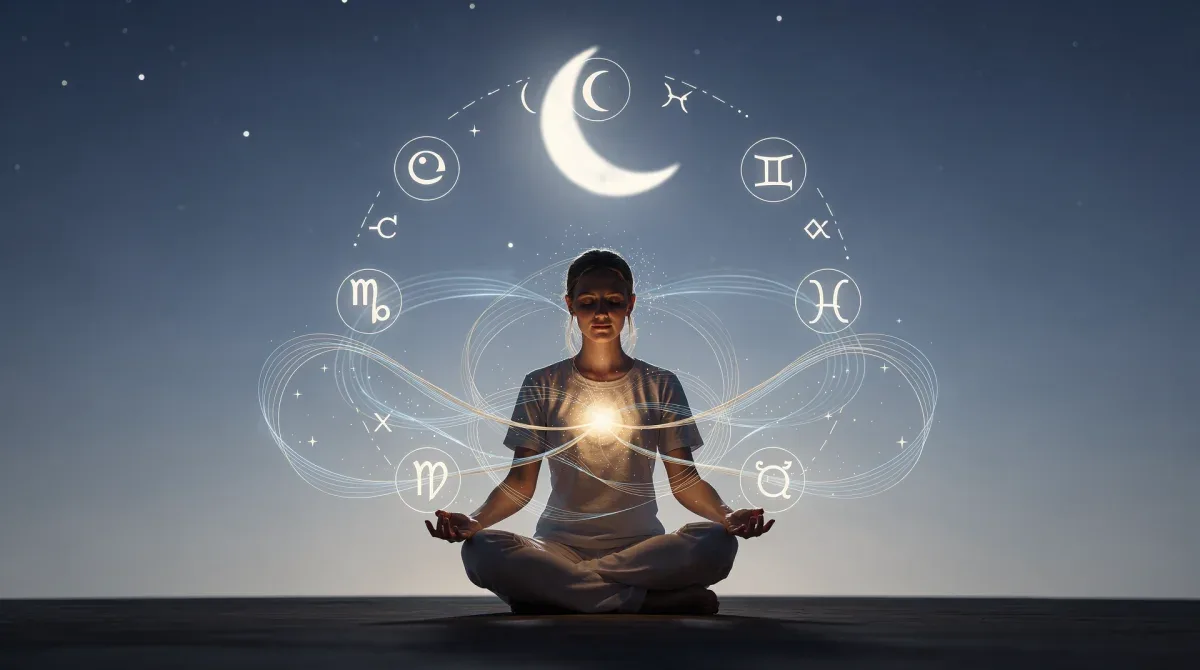
For example, if your lunar return Moon is in Leo in the 5th house, you might experience a month focused on creative self-expression, romance, and joyful pursuits, with a strong desire for recognition and appreciation. If it's in Virgo in the 6th house, the focus could be on health routines, daily work, and a need for order and practical service, accompanied by a tendency towards self-criticism.
Key Aspects to Other Planets
Beyond its sign and house, the Moon's aspects to other planets in the lunar return chart provide further layers of detail. Aspects are angular relationships between planets that indicate how their energies interact. Conjunctions, oppositions, squares, trines, and sextiles to the Moon will modify its influence:
- Conjunctions: Blend energies, intensifying the Moon's emotional themes with the qualities of the other planet.
- Squares/Oppositions: Indicate tension, challenges, or areas of conflict in your emotional life. These are opportunities for growth.
- Trines/Sextiles: Suggest ease, harmony, and supportive energies for your emotional well-being.
A Moon square Mars, for example, might point to a month of emotional irritability or conflicts, while a Moon trine Venus could indicate a period of emotional comfort, pleasant social interactions, and a desire for harmony. By carefully analyzing these placements and interactions, you begin to paint a comprehensive picture of your monthly emotional landscape, moving beyond superficial feelings to understand the deeper currents at play.

Step 3: Analyzing Other Planetary Placements and Houses
While the Moon is undeniably the star of the lunar return chart, the positions and aspects of the other planets and the house cusps are equally vital for a complete and nuanced interpretation. These elements provide context, highlighting the specific areas of life where your emotions will be most engaged and the external influences that might shape your monthly experience. Ignoring these factors would be like reading only a single chapter of a complex book.
Each planet in the lunar return chart represents a different facet of your experience. Mercury, for instance, will show where your monthly communication and thinking patterns are focused. Venus indicates your desires, relationships, and values, while Mars reveals your drive, energy, and potential for conflict. Jupiter and Saturn, as slower-moving planets, often set broader themes, but their specific house and aspect placements in the monthly chart can pinpoint where those themes will manifest.
Planets in Houses: Areas of Focus
The houses in the lunar return chart are perhaps the most direct indicators of *where* the action will unfold each month. Each house governs specific life areas:
- 1st House (Self): Focus on personal identity, appearance, and self-assertion.
- 2nd House (Resources): Themes of money, possessions, and self-worth.
- 3rd House (Communication): Short trips, siblings, learning, and daily interactions.
- 4th House (Home/Family): Domestic life, roots, and emotional security.
- 5th House (Creativity/Romance): Self-expression, children, hobbies, and love affairs.
- 6th House (Work/Health): Daily routines, service, and well-being.
- 7th House (Partnerships): Close relationships, marriage, and open enemies.
- 8th House (Transformation): Shared resources, intimacy, and psychological depths.
- 9th House (Higher Learning/Travel): Philosophy, long journeys, and spiritual growth.
- 10th House (Career/Public Image): Ambition, reputation, and social standing.
- 11th House (Friends/Goals): Social groups, aspirations, and humanitarian efforts.
- 12th House (Spirituality/Hidden Matters): Solitude, subconscious, and hidden challenges.
If Jupiter, the planet of expansion and luck, is in your 10th house of career in a particular lunar return, you might experience professional growth or public recognition that month. Conversely, if Saturn, the planet of restriction and discipline, is in your 7th house, relationships might require more effort and commitment.
Interpreting Planetary Aspects and Retrogrades
The aspects formed by other planets to each other (and not just to the Moon) also color the monthly narrative. A harmonious trine between Venus and Mars could indicate a month of easy romantic connections or creative flow. A challenging square between Mercury and Uranus might suggest unexpected communication breakdowns or sudden changes in plans.
Furthermore, pay attention to any planets that are retrograde in your lunar return chart. Retrograde planets often indicate a period of introspection, review, or delays in the areas they govern. For example, Mercury retrograde in a lunar return might mean revisiting old conversations or experiencing communication glitches. This comprehensive analysis of all planetary placements and aspects provides the necessary depth to truly map your monthly emotional peaks and troughs, offering actionable insights for navigating 2026.
Step 4: Integrating Transits and Progressions for a Holistic View
To truly master the art of mapping your monthly emotional peaks with lunar return charts, it's essential to integrate them with ongoing transits and secondary progressions. While the lunar return provides a specific 28-day forecast, transits and progressions offer the broader astrological context, revealing long-term themes and external influences that will shape your emotional journey throughout 2026. Without this integration, the lunar return can feel like a single puzzle piece without the full picture.
Transits involve the current positions of planets moving through the zodiac as they interact with your natal chart. These are the daily, weekly, and monthly astrological weather patterns. Progressions, on the other hand, represent the unfolding of your natal chart over time, showing your psychological and spiritual evolution. They are slower, more personal indicators of your inner growth. When you combine these layers, you gain a truly holistic understanding of your emotional experience.
Transits: The Daily Astrological Weather
Ongoing transits provide the immediate backdrop for your lunar return. For example, if your lunar return chart shows a strong focus on career (10th house), but simultaneously a major transit of Uranus is squaring your natal Moon, you might experience unexpected emotional upheavals or a sudden shift in your domestic life during that month, even if the lunar return itself doesn't explicitly highlight it. Transits can amplify, mitigate, or even redirect the energies indicated in your lunar return.
- Outer Planet Transits (Jupiter, Saturn, Uranus, Neptune, Pluto):: Set the stage for longer-term emotional and life themes that will influence multiple lunar returns throughout 2026.
- Inner Planet Transits (Sun, Mercury, Venus, Mars): Offer daily fluctuations and specific events that can trigger or support the emotional themes of your current lunar return.
- Lunar Transits: The daily movement of the Moon itself can pinpoint specific days within the 28-day cycle when certain emotions or events are more likely to occur.
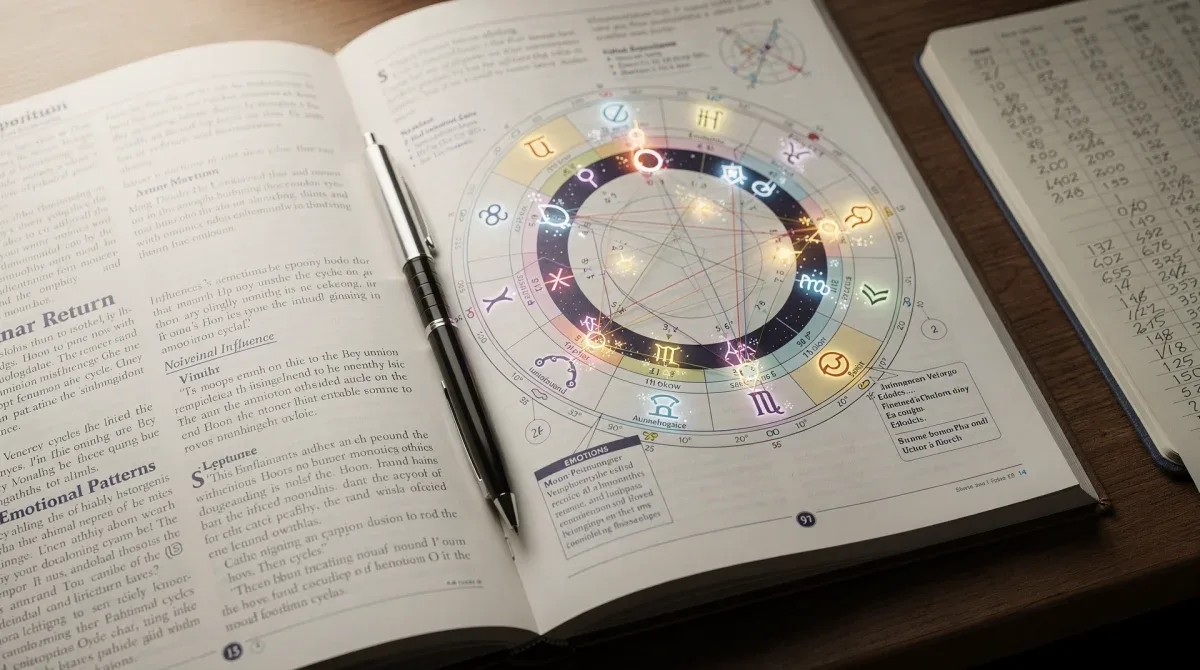
Paying attention to how major transits interact with your lunar return chart's Moon, angles, and key planets will give you a dynamic understanding of your emotional landscape. This allows for a more proactive approach to your feelings, helping you prepare for periods of heightened sensitivity or exciting opportunities.
Progressions: Your Evolving Inner Landscape
Secondary progressions reveal your internal growth and evolving psychological state. The progressed Moon, in particular, moves about one degree per month and signifies your evolving emotional needs and focus. When the progressed Moon changes sign or house, or forms a major aspect, it marks a significant shift in your emotional landscape. The lunar return chart will then show how these deeper, evolving themes manifest on a monthly basis.
For instance, if your progressed Moon is moving through your natal 7th house, indicating a period of growth in relationships, your monthly lunar returns will likely feature the 7th house prominently, or highlight planetary aspects related to partnerships. This synergy between progressions and lunar returns offers a powerful lens through which to view your emotional development, allowing you to not only map your monthly peaks but also understand their place within your larger journey of self-discovery in 2026. This integrated approach ensures that your monthly emotional mapping is not just a series of isolated events, but a continuous narrative of growth and awareness.
Practical Application: Navigating Your Monthly Cycles
Having calculated and interpreted your lunar return charts for 2026, the real power lies in their practical application. This isn't just an academic exercise; it's a tool for conscious living. By understanding the emotional blueprint of each month, you can proactively plan, adapt, and respond to your inner world with greater wisdom. This allows you to harness your emotional energy rather than being swept away by it, transforming potential challenges into opportunities for growth and self-mastery.
Imagine knowing that a particular month's lunar return suggests a period of heightened sensitivity and a need for solitude. You could then consciously schedule more downtime, prioritize self-care, and communicate your needs to those around you, avoiding burnout or emotional overwhelm. Conversely, if a month indicates strong creative energy or social opportunities, you can lean into those impulses, scheduling creative projects or social engagements with confidence.
Aligning Actions with Emotional Tides
The insights from your lunar return charts enable a strategic alignment of your activities with your emotional tides:
- Strategic Planning: Schedule important meetings, creative projects, or social events during emotionally favorable periods.
- Self-Care Protocols: Implement specific self-care routines based on the month's emotional needs (e.g., more meditation during introspective periods, more physical activity during energetic phases).
- Relationship Management: Understand potential emotional triggers in relationships and approach interactions with greater empathy and awareness.
- Goal Setting: Set monthly goals that resonate with the emotional focus of the lunar return, ensuring greater success and satisfaction.
This proactive approach helps you to flow with your natural rhythms, rather than resisting them. It fosters a sense of inner harmony and reduces stress, as you're no longer fighting against your own emotional currents. It's about working smarter, not harder, with your emotions.
Journaling and Reflection for Deeper Understanding
To maximize the benefits of lunar return charts, consistent journaling and reflection are invaluable. At the beginning of each lunar month, review your chart and make notes on its key themes. Throughout the month, record your emotional experiences, significant events, and how they align with your chart's predictions. This practice creates a feedback loop, deepening your understanding of your own unique emotional patterns.
Ask yourself questions like: "How did the Moon in the 4th house manifest in my home life this month?" or "Did the Moon-Mars square lead to emotional confrontations as predicted?" Over time, you'll develop a personal lexicon of your emotional responses, refining your ability to interpret your charts and navigate your inner world with increasing precision. This continuous learning process makes lunar return charts an indispensable tool for personal growth and emotional well-being throughout 2026 and beyond.
The Transformative Power of Lunar Awareness
Embracing the study of lunar return charts for 2026 transcends mere astrological curiosity; it becomes a profound practice of self-awareness and emotional mastery. The ability to map your monthly emotional peaks and troughs empowers you to move through life with intention, rather than being a passive recipient of your feelings. This transformative power lies in the predictive insight these charts offer, allowing you to anticipate emotional trends and consciously engage with your inner landscape.
When you understand that a particular month might bring heightened sensitivity due to a specific lunar placement, you can prepare yourself emotionally. You might choose to limit exposure to stressful situations, prioritize quiet reflection, or seek supportive environments. Conversely, if a chart indicates a period of expansive emotional joy or creative flow, you can lean into those energies, maximizing opportunities for personal expression and connection. This isn't about controlling your emotions, but rather understanding their cyclical nature and learning to surf their waves.
Cultivating Emotional Resilience and Proactive Living
Regularly consulting your lunar return charts helps to cultivate emotional resilience. By recognizing that emotional states are cyclical and temporary, you develop a more detached and objective perspective on your feelings. This detachment doesn't mean indifference; rather, it allows for a more conscious response instead of an automatic reaction.
- Anticipate Challenges: Identify potential emotional triggers or periods of stress in advance.
- Plan for Growth: Recognize opportunities for emotional development and self-improvement.
- Enhance Relationships: Understand your own emotional needs and communicate them effectively to others.
- Boost Well-being: Align your lifestyle choices with your monthly emotional rhythms for greater harmony.
This proactive approach extends beyond merely coping; it transforms your relationship with your emotional self. You become an active participant in your emotional journey, equipped with a navigational system that guides you through the complexities of your inner world. This practice fosters a deeper sense of self-trust and confidence, as you learn to honor your emotional experiences as valuable sources of information and guidance.
Integrating Lunar Wisdom into Daily Life
The ultimate goal of studying lunar return charts is to integrate this ancient wisdom into your daily life. It’s about more than just reading a chart; it’s about living in alignment with the lunar rhythms that govern so much of our human experience. This means taking moments for reflection at the start of each lunar cycle, checking in with your emotional state throughout the month, and making conscious choices that support your well-being.
By consistently engaging with your lunar returns, you build a powerful habit of self-awareness. You begin to notice subtle shifts in your mood, energy levels, and desires, connecting them back to the astrological influences. This continuous feedback loop deepens your intuition and strengthens your connection to the cosmos. In 2026, let the lunar return charts be your personal guide to a more emotionally intelligent, resilient, and fulfilling life, allowing you to navigate your inner world with grace and profound understanding.
| Key Aspect | Brief Description |
|---|---|
| Calculate Chart | Use exact birth data and current location to generate monthly lunar return charts for 2026. |
| Interpret Moon | Analyze the Moon's sign, house, and aspects to understand the month's emotional tone. |
| Planetary Context | Examine other planets' placements and aspects for broader life area influences and challenges. |
| Integrate Transits | Combine with ongoing transits and progressions for a holistic view of emotional evolution. |
Frequently Asked Questions About Lunar Return Charts
What is a lunar return chart and how does it differ from a natal chart?▼A lunar return chart is a monthly astrological chart cast for the exact moment the transiting Moon returns to its natal position, offering insights into your emotional landscape for the next 28 days. A natal chart, conversely, is a fixed map of the sky at your birth, representing your inherent personality and life potential.
Why is the birth time so crucial for calculating lunar return charts?▼An exact birth time is paramount because it determines the precise degree of your natal Moon and the accurate house cusps in your chart. Even a few minutes' difference can shift house placements, which are vital for understanding the specific life areas where emotional themes will manifest each month.
How can lunar return charts help with emotional well-being?▼By mapping your monthly emotional peaks and troughs, lunar return charts enable proactive emotional management. They help you anticipate periods of heightened sensitivity or joy, allowing you to plan self-care, adjust social interactions, and align activities with your inner emotional tides, fostering greater resilience and balance.
Do I need a professional astrologer to interpret my lunar return charts?▼While a professional astrologer can offer deep, personalized insights, many resources are available for self-study. Online calculators can generate charts, and astrological textbooks or websites can guide you through interpretations. Starting with the Moon's sign and house is a great way to begin understanding your monthly emotional patterns.
What is the difference between the location for a natal chart and a lunar return chart?▼Your natal chart is cast for your birth location. However, a lunar return chart is calculated for your current residence. This is because the lunar return reflects your immediate emotional environment and how you experience the monthly lunar cycle in your present circumstances, wherever you are living.
Conclusion
The journey into understanding lunar return charts for 2026 offers a profound pathway to self-discovery and emotional mastery. By meticulously following the four steps—calculating your chart, interpreting the Moon's position, analyzing other planetary influences, and integrating transits and progressions—you gain an unparalleled tool for mapping your monthly emotional peaks across 28 days. This astrological practice isn't just about prediction; it's about cultivating a deeper, more conscious relationship with your inner world, fostering emotional resilience, and aligning your life with the natural rhythms of the cosmos. As you navigate the intricate dance of the Moon each month, you'll uncover a richer, more intentional way of experiencing your feelings, transforming challenges into opportunities for growth, and embracing a truly integrated approach to well-being.