The 3-Fabric Test: Identify Real Grade-A Cashmere Under $150
Advertisements
To identify real Grade-A cashmere before spending over $150, look for a soft, slightly fuzzy texture, examine the knit for tightness and uniformity, and perform a gentle stretch test to assess elasticity and recovery, ensuring a wise investment.
Navigating the world of luxury fabrics can be challenging, especially when seeking genuine value. This guide will equip you with the essential knowledge to perform the 3-fabric test: how to identify real Grade-A cashmere before spending over $150, ensuring your investment is worthwhile and authentic.
Understanding Grade-A Cashmere: The Gold Standard
Cashmere isn't just a fabric; it's a statement of luxury, comfort, and quality. However, not all cashmere is created equal. Understanding what constitutes Grade-A cashmere is the first crucial step in making an informed purchase. This premium classification refers to cashmere fibers that are exceptionally fine, typically less than 15.5 microns in diameter, and long, usually over 36mm. These characteristics contribute directly to the fabric's legendary softness, lightweight feel, and superior warmth without bulk.
The origin of cashmere also plays a significant role. The finest cashmere often comes from the undercoat of Cashmere goats found in regions like Mongolia, Inner Mongolia, and Tibet, where extreme cold conditions promote the growth of these ultra-fine fibers. These harsh environments necessitate a denser, softer undercoat, which is then meticulously combed from the goats, not shorn, preserving the fiber's integrity. The processing of these delicate fibers is an art form, involving careful sorting, cleaning, and spinning to create the luxurious yarn we cherish. Inferior grades might use shorter, thicker fibers, leading to a coarser feel and quicker pilling, diminishing the garment's lifespan and aesthetic appeal. Therefore, recognizing the hallmarks of Grade-A quality is paramount to avoid falling prey to misleading labels and overpriced blends.
The fiber diameter and length
The quality of cashmere is primarily determined by the diameter and length of its fibers. Grade-A cashmere boasts the finest and longest fibers, which are responsible for its unparalleled softness and durability. Finer fibers, measured in microns, create a smoother, less abrasive surface, while longer fibers allow for a tighter, more stable yarn that resists pilling. This combination ensures a garment that not only feels incredible against the skin but also retains its shape and luxurious appearance over time.
- Fiber Diameter: Grade-A cashmere fibers are typically less than 15.5 microns.
- Fiber Length: These fibers are usually longer than 36mm, contributing to strength.
- Softness: The fineness ensures a silky-smooth touch, free from scratchiness.
- Durability: Longer fibers create a more resilient yarn, reducing pilling and wear.
In essence, Grade-A cashmere represents the pinnacle of natural fiber luxury, offering a blend of softness, warmth, and durability that is unmatched. Knowing these fundamental aspects empowers you to critically evaluate cashmere products and distinguish genuine quality from imitations. This foundational understanding sets the stage for the practical tests you'll perform to confirm authenticity, ensuring your investment is truly in a premium product.
Test 1: The Touch and Feel Assessment
The most immediate and instinctive way to gauge cashmere quality is through touch. Genuine Grade-A cashmere possesses a distinctive feel that is difficult to replicate with inferior materials or blends. When you first encounter a cashmere garment, close your eyes and focus solely on the tactile experience. It should feel incredibly soft, almost buttery, and luxurious against your skin, without any hint of scratchiness or coarseness. This unparalleled softness is a direct result of the fine diameter and natural crimp of the cashmere fibers.
The texture and softness check
Beyond just softness, pay attention to the texture. Real cashmere often has a slight, delicate fuzziness, a subtle halo of fibers that contributes to its plush appearance. This isn't to be confused with excessive pilling, which can occur with lower-grade cashmere or blends due to shorter fibers. Gently rub the fabric between your fingers. Does it glide smoothly? Does it feel warm almost instantly? These are positive indicators. Synthetic blends, like acrylic, might feel soft initially but often lack the natural warmth and unique "give" of cashmere. They might also feel slick or overly uniform, lacking the organic texture of natural fibers.

Another tell-tale sign is the way the fabric drapes. High-quality cashmere will have a beautiful, fluid drape, conforming gracefully to contours rather than appearing stiff or rigid. This characteristic is due to the natural flexibility and lightness of the fine fibers. When evaluating a garment, consider how it moves and settles. A stiff or overly structured feel could indicate a blend with less desirable fibers or a lower-grade cashmere that lacks the inherent suppleness. Trust your instincts; if it doesn't feel exquisitely soft and naturally flowing, it's likely not Grade-A cashmere.
In conclusion, the touch and feel assessment is a critical first line of defense in identifying authentic cashmere. It relies on your sensory perception to detect the subtle nuances that distinguish premium Grade-A fibers from their imitations. By focusing on softness, subtle fuzziness, and natural drape, you can begin to discern the true quality of a cashmere garment before moving on to more detailed inspections.
Test 2: The Visual Inspection and Weave Analysis
While touch is paramount, a thorough visual inspection provides crucial objective evidence of cashmere quality. This test delves into the construction of the fabric itself, examining the weave, uniformity, and overall appearance for clues about its authenticity and grade. A discerning eye can spot inconsistencies or tell-tale signs that differentiate genuine Grade-A cashmere from its less luxurious counterparts.
Examining the knit and uniformity
Begin by holding the garment up to the light. Look for a consistent, tight knit or weave. In high-quality cashmere, the stitches should be even and dense, with no visible gaps or loose threads. A loose or irregular knit can indicate a lower quality yarn or less careful craftsmanship, which will affect the garment's durability and ability to retain its shape. The surface of the fabric should appear smooth and uniform, though a slight, even fuzziness is acceptable and characteristic of cashmere.
- Tightness of Weave: Look for dense, even stitches without gaps.
- Surface Uniformity: The fabric should appear consistent, with a subtle, even halo.
- Absence of Imperfections: Avoid garments with visible knots, slubs, or uneven dyeing.
- Color Depth: Rich, consistent color often indicates quality dyeing processes.
Next, pay close attention to the fibers themselves. Can you see individual fibers? Are they fine and consistent, or do they appear coarse and varied? Grade-A cashmere fibers are incredibly fine, so much so that individual strands might be difficult to distinguish without very close inspection or even a magnifying glass. If you notice thick, coarse fibers, it's a strong indication that the material is either a blend or a lower grade of cashmere. Also, check for any signs of pilling, especially on new garments. While some pilling can occur with wear, excessive pilling on a new item is a red flag for shorter, inferior fibers.
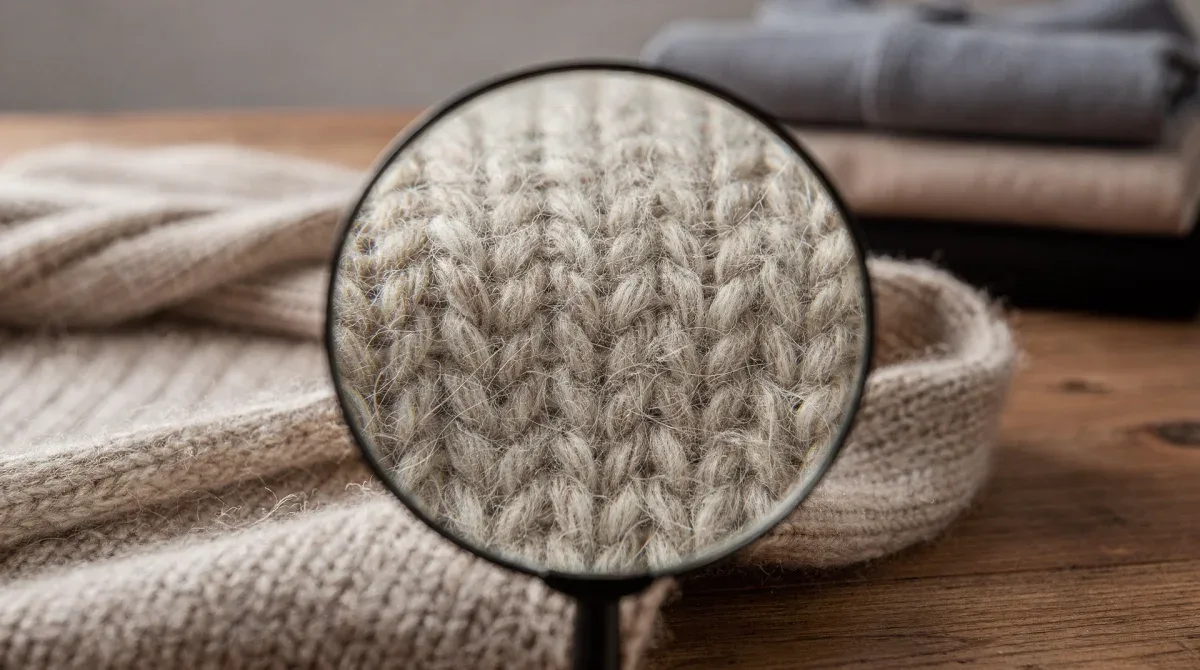
Lastly, observe the overall finish and detailing of the garment. Are the seams neatly sewn? Are the edges finished cleanly? High-quality cashmere garments are typically well-constructed, reflecting the care taken with such a precious material. Poor stitching or sloppy finishing can undermine even the best fibers. A thorough visual inspection, therefore, provides a comprehensive understanding of the cashmere's quality, complementing the tactile assessment and bringing you closer to identifying a truly Grade-A product.
Test 3: The Stretch and Recovery Examination
The stretch and recovery test is a crucial indicator of cashmere's inherent elasticity and the quality of its fibers. This test assesses how well the fabric retains its shape after being gently stretched, a characteristic directly linked to the length and integrity of the cashmere fibers. A garment made from Grade-A cashmere should exhibit a noticeable bounce-back, demonstrating its resilience and ability to withstand repeated wear without losing its form.
Assessing elasticity and shape retention
To perform this test, select a small, inconspicuous section of the garment, such as the cuff, hem, or a side seam. Gently stretch the fabric horizontally and vertically, applying moderate pressure. Observe how much the fabric stretches and, more importantly, how quickly and completely it returns to its original shape. High-quality cashmere, with its long, strong fibers, will stretch a bit but then spring back almost immediately, showing minimal distortion. This elasticity is a hallmark of well-spun, premium yarn.
Conversely, lower-grade cashmere or blends containing synthetic fibers will often stretch easily but recover slowly, or not fully at all. You might notice the stretched area remaining slightly elongated, indicating a lack of resilience. This is because shorter, weaker fibers or the addition of less elastic synthetic materials compromise the fabric's structural integrity. A garment that fails this test is likely to sag, stretch out of shape, and lose its aesthetic appeal quickly with wear, making it a poor investment.
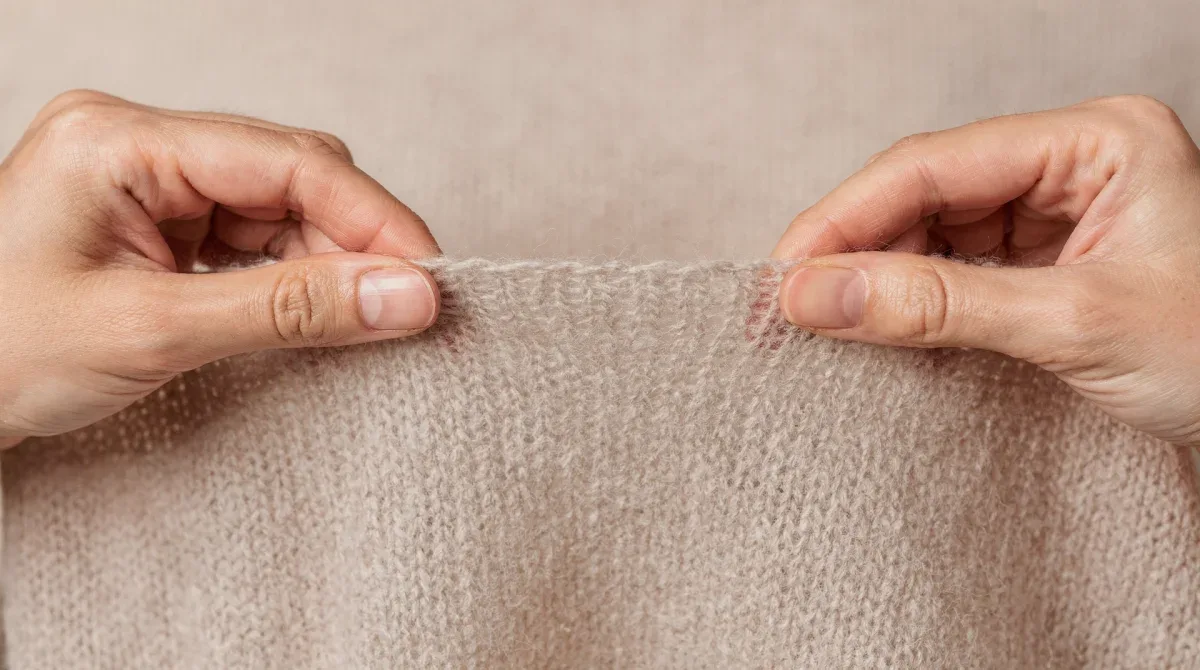
Furthermore, consider the 'memory' of the fabric. After stretching, does it feel like the fibers are actively pulling back into place? This 'memory' is a key characteristic of natural, high-quality fibers. Synthetic materials often lack this inherent memory, leading to a garment that quickly looks tired and worn. The stretch and recovery test, therefore, provides invaluable insight into the longevity and wearability of a cashmere garment, ensuring that your purchase will maintain its luxurious look and feel over time. This test, combined with the touch and visual inspections, forms a comprehensive approach to verifying Grade-A cashmere.
Common Cashmere Blends and Their Pitfalls
While pure Grade-A cashmere offers unparalleled luxury, the market is rife with cashmere blends that can be misleading. Understanding these blends and their potential pitfalls is crucial for making an informed purchase, especially when trying to stay under a budget of $150. Many manufacturers combine cashmere with other fibers to reduce costs, create different textures, or enhance certain properties. However, these blends often come at the expense of cashmere's signature qualities.
Distinguishing blends from pure cashmere
Common blending partners include wool (merino, lamb's wool), silk, cotton, and synthetic fibers like nylon, acrylic, or rayon. While some blends, like cashmere-silk, can offer a lovely drape and subtle sheen, they will never replicate the pure warmth and ethereal softness of 100% Grade-A cashmere. Wool blends, for instance, might add bulk and warmth but can introduce a degree of scratchiness that pure cashmere avoids. Synthetic blends are particularly problematic; they often mimic the initial softness but lack breathability, natural warmth, and the luxurious longevity of cashmere.
- Wool Blends: Can add bulk but often introduce a coarser texture.
- Silk Blends: Offer sheen and drape but reduce cashmere's signature warmth.
- Synthetic Blends: Lack breathability, natural warmth, and durability.
- Label Reading: Always check the care label for fiber composition percentages.
The primary pitfall of blends, especially those with a low percentage of cashmere, is that they often trade on the 'cashmere' name while delivering a significantly inferior product. A sweater labeled 'cashmere blend' with only 10% cashmere might feel soft initially due to surface treatments, but it will lack the true performance and feel of a higher-percentage blend or pure cashmere. These garments are prone to pilling, losing shape, and wearing out quickly, making them a poor value even at a lower price point.
Always scrutinize the care label for fiber composition. A label stating '100% Cashmere' is ideal, but even then, the grade of cashmere matters. If a blend is unavoidable due to budget or specific garment requirements, aim for blends with a high percentage of cashmere (e.g., 70% or more) and reputable blending partners like silk. However, for true luxury and performance, pure Grade-A cashmere remains the gold standard, and understanding these blends helps you appreciate why it's worth seeking out genuine quality.
Price vs. Quality: What to Expect Under $150
The allure of cashmere at a bargain price is undeniable, but it often comes with a significant caveat: true Grade-A cashmere typically commands a higher price tag. This section explores the realistic expectations when searching for cashmere under $150, helping you discern genuine value from deceptive deals. Understanding the cost factors involved in producing high-quality cashmere is key to navigating this price point effectively.
Realistic expectations for budget-friendly cashmere
The production of Grade-A cashmere is a labor-intensive process, from the careful combing of goat undercoats to the meticulous sorting, spinning, and weaving of fine fibers. These processes, coupled with the limited supply of premium raw material, inherently drive up the cost. A truly 100% Grade-A cashmere sweater, especially from a reputable brand, will rarely be found for less than $150, and often significantly more. Therefore, when you encounter cashmere products at this lower price point, it's essential to approach them with a critical eye.
What can you realistically expect to find under $150? You might encounter: thinner gauges of 100% cashmere, which, while authentic, might not offer the same luxurious density or warmth; garments made from lower grades of cashmere (Grade B or C), which use shorter, coarser fibers and are more prone to pilling; or, most commonly, cashmere blends. As discussed, these blends can vary widely in quality and cashmere content. Some well-executed blends with a high percentage of cashmere (e.g., 50-70% cashmere with silk or fine merino wool) might offer a good balance of luxury and affordability.
It's also worth considering sales and clearance events. Reputable brands occasionally offer discounts on their cashmere items, making it possible to find a genuine piece within your budget. However, always exercise caution and apply the 3-fabric test even to discounted items. The 'too good to be true' adage often applies to cashmere. Instead of chasing pure cashmere at an unrealistic price, focus on finding the best possible quality within your budget. This might mean opting for a high-quality cashmere blend that still offers a luxurious feel and decent durability, rather than a questionable '100% cashmere' item that falls apart after a few washes.
In summary, while finding pure Grade-A cashmere under $150 is challenging, it's not entirely impossible if you're patient and vigilant during sales. More often, this price point will yield good quality cashmere blends or thinner 100% cashmere items. The key is to manage your expectations and always apply the comprehensive fabric tests to ensure you're getting the best possible value for your money, prioritizing genuine quality over misleading labels.
Caring for Your Cashmere: Maximizing Longevity
Investing in cashmere, whether it's a pure Grade-A piece or a high-quality blend, means committing to proper care. The delicate nature of cashmere fibers requires specific attention to maintain its luxurious feel, shape, and longevity. Proper care is not just about cleaning; it's about preserving the integrity of the fibers and ensuring your garment remains a cherished item in your wardrobe for years to come. Neglecting proper care can quickly diminish even the highest quality cashmere.
Essential tips for washing and storage
The golden rule for cashmere care is gentle handling. Whenever possible, hand wash your cashmere garments using cool water and a specialized wool or cashmere detergent. Avoid harsh chemicals or excessive agitation, which can damage the delicate fibers. Gently squeeze out excess water, never wring, and lay the garment flat on a clean towel to air dry. Direct sunlight or hanging wet cashmere can cause stretching and distortion, so choose a cool, shaded area.
- Hand Washing: Use cool water and mild cashmere detergent.
- No Wringing: Gently squeeze out water to prevent stretching.
- Flat Drying: Lay flat on a towel, away from direct heat or sun.
- Avoid Hanging: Store folded to prevent shoulder bumps and stretching.
When it comes to storage, cashmere's vulnerability to moths makes careful preparation essential. Always store cashmere clean, as moths are attracted to body oils and food stains. Fold your garments neatly and store them in breathable garment bags or acid-free tissue paper. Cedar balls or lavender sachets can act as natural moth deterrents. Avoid hanging cashmere, especially heavy sweaters, as this can cause them to stretch and lose their shape over time. Instead, store them folded in drawers or on shelves.
Regular maintenance also includes addressing pilling. While Grade-A cashmere is less prone to pilling, some minor pilling can occur in areas of friction. Use a cashmere comb or fabric shaver to gently remove these pills, restoring the garment's smooth appearance. By adhering to these essential care practices, you not only extend the life of your cashmere but also preserve its exquisite softness and luxurious appeal, ensuring that your investment continues to bring comfort and elegance for many seasons.
| Key Test | What to Look For |
|---|---|
| Touch & Feel | Incredibly soft, buttery, slightly fuzzy, no scratchiness. |
| Visual Inspection | Tight, even knit, uniform surface, fine fibers, good drape. |
| Stretch & Recovery | Stretches gently, springs back quickly and completely. |
| Fiber Composition | Check label for '100% Cashmere' or high percentage blends. |
Frequently asked questions about cashmere identification
What is the primary difference between Grade-A and lower-grade cashmere?▼Grade-A cashmere features exceptionally fine fibers (under 15.5 microns) and longer lengths (over 36mm). This results in superior softness, reduced pilling, and enhanced durability compared to lower grades, which use coarser, shorter fibers that lead to a less luxurious feel and quicker wear.
Can I trust the label '100% Cashmere' on budget items?▼While a '100% Cashmere' label indicates no other fibers are present, it doesn't guarantee Grade-A quality. Budget items might use lower-grade cashmere with shorter, thicker fibers prone to pilling. Always perform the touch, visual, and stretch tests to verify quality, regardless of the label.
How does a cashmere blend compare to pure cashmere in terms of feel and warmth?▼Cashmere blends, while often softer than pure wool, rarely achieve the exquisite softness and lightweight warmth of pure Grade-A cashmere. Blends with synthetics can feel slick and lack breathability, while wool blends might introduce a slight scratchiness. The feel and warmth diminish with lower cashmere percentages.
Is pilling always a sign of low-quality cashmere?▼Not always, but excessive pilling on a new garment is a strong indicator of low-quality cashmere, often due to shorter fibers. Some minor pilling can occur even on Grade-A cashmere in areas of high friction, but it should be minimal and easily removed with a cashmere comb.
What is the best way to care for my cashmere to prevent damage?▼Hand wash cashmere in cool water with a specialized detergent, gently squeezing out water without wringing. Always lay flat to dry, away from direct heat or sunlight. Store folded in breathable bags with moth deterrents like cedar, avoiding hangers to prevent stretching and maintain shape.
Conclusion
Mastering the 3-fabric test empowers you to confidently identify real Grade-A cashmere, ensuring that your investment of over $150 is truly for a product of genuine luxury and lasting quality. By combining tactile assessment, meticulous visual inspection, and the crucial stretch and recovery examination, you can discern authentic cashmere from misleading imitations and inferior blends. This knowledge not only enhances your shopping savvy but also fosters an appreciation for the craftsmanship and natural elegance that define premium cashmere. Remember that true value lies not just in the price tag, but in the inherent quality, durability, and comfort that only Grade-A cashmere can provide.