Federal Cybersecurity Regulations 2026
Advertisements
A major regulatory shift is redefining digital compliance standards across the United States.
New Federal Cybersecurity Regulations outlines updated compliance mandates, implementation timelines, and actionable risk-management strategies to help organizations safeguard critical systems and avoid non-compliance penalties.
Understanding the Scope of New Federal Cybersecurity Regulations 2026
The recently announced New Federal Cybersecurity Regulations represent a significant expansion of governmental oversight into corporate digital infrastructure.
These regulations are designed to bolster national cybersecurity resilience against an increasingly complex threat landscape.
Initial estimates indicate that these mandates will directly impact a broad spectrum of industries, ranging from critical infrastructure providers to technology firms and financial institutions.
The overarching goal is to standardize and elevate the baseline security practices across entities deemed vital to national security and economic stability.
The scope extends beyond mere technical controls, encompassing governance, risk management, and incident response protocols.
Businesses must understand that compliance will require a holistic approach, integrating cybersecurity into their core operational strategies rather than treating it as an isolated IT function.
Who is Directly Affected by Federal Cybersecurity Regulations 2026?
Approximately 30% of US businesses, primarily those operating in critical sectors or handling sensitive national data, will fall under the direct purview of these new regulations.
This includes, but is not limited to, defense contractors, energy companies, healthcare providers, and certain financial services.
The criteria for inclusion are still being refined, but early indications suggest a focus on entities whose compromise could lead to significant national security risks, economic disruption, or widespread public harm.
Organizations should actively monitor official guidance to determine their specific obligations under the new framework.
Even businesses not directly mandated may find themselves indirectly affected through supply chain dependencies or industry best practices that will inevitably align with these federal standards. Proactive assessment is crucial for all enterprises.
- Critical Infrastructure providers (e.g., energy, water, telecommunications)
- Defense Industrial Base (DIB) contractors and subcontractors
- Healthcare organizations handling protected health information (PHI)
- Financial institutions with significant market operations
- Government contractors and agencies managing federal data
Key Components of the Upcoming Cybersecurity Mandates
The new Federal Cybersecurity Regulations are structured around several core pillars, each designed to address specific vulnerabilities and enhance overall digital resilience. These pillars include stringent requirements for risk assessments, data protection, incident reporting, and supply chain security.
Businesses will be expected to demonstrate a robust understanding of their digital assets and the threats they face, implementing controls commensurate with their risk profile. This moves beyond a one-size-fits-all approach, demanding tailored security strategies.
Furthermore, the regulations emphasize continuous monitoring and improvement, signaling a shift from static compliance to dynamic security management. This ongoing commitment is vital for adapting to the rapidly evolving threat landscape.
Mandatory Risk Assessment and Management Frameworks
A cornerstone of the Federal Cybersecurity Regulations is the requirement for regular, comprehensive cybersecurity risk assessments.
These assessments must identify, evaluate, and prioritize risks to information systems and data, leading to the implementation of appropriate mitigation strategies.
Organizations will need to establish and maintain a formal risk management program, documenting their methodologies, findings, and remediation plans.
This framework is not merely a checklist but a continuous process of identification, protection, detection, response, and recovery, aligning with established cybersecurity frameworks like NIST.
The emphasis is on understanding the potential impact of cyber incidents and allocating resources effectively to reduce vulnerabilities. This structured approach helps ensure that critical assets are adequately protected against foreseeable threats.

Compliance Deadlines and Implementation Timeline
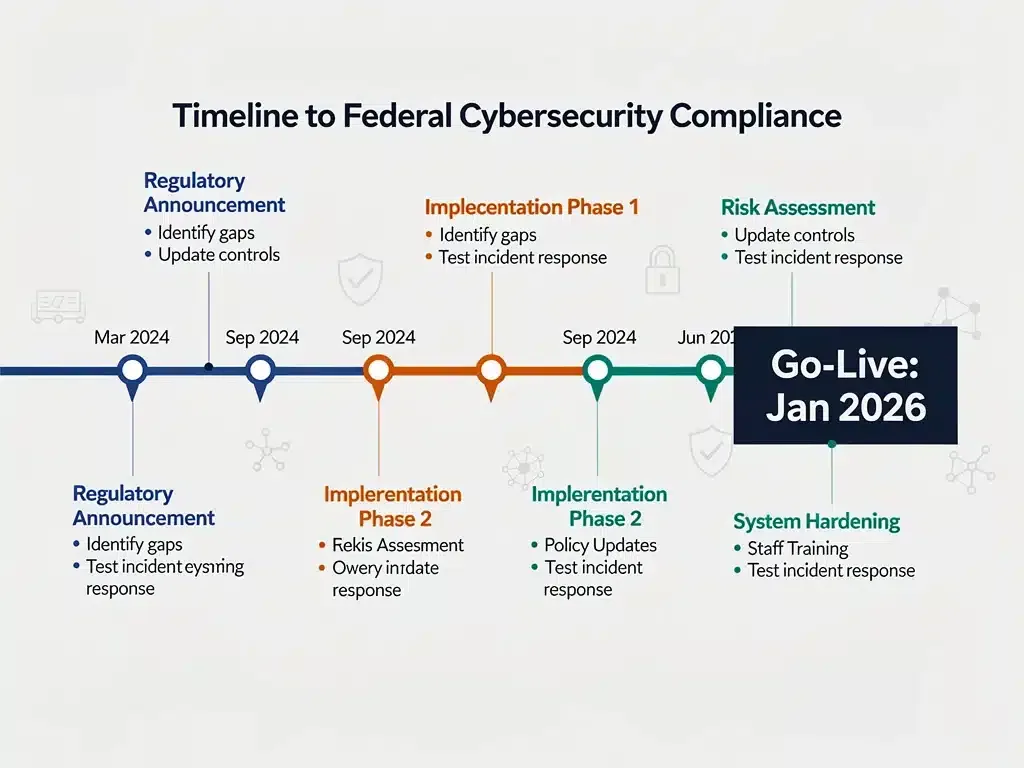
The January 2026 deadline for the New Federal Cybersecurity Regulations is rapidly approaching, making immediate action imperative.
While the full implementation is set for this date, many preparatory steps and interim deadlines are already in effect or will be released soon.
Businesses should not view January 2026 as the starting gun, but rather as the culmination of a phased implementation process.
Early engagement with the regulatory framework, understanding its nuances, and beginning the necessary technical and procedural adjustments well in advance will be critical for avoiding penalties.
Government agencies are expected to provide detailed guidance and potentially phased rollout schedules for different sectors, but the core expectation remains consistent: organizations must be ready for full compliance by the specified go-live date.
Procrastination in this area could prove exceptionally costly.
Critical Milestones Leading to January 2026
While the full regulatory text for Federal Cybersecurity Regulations is still being finalized and disseminated, several key milestones are anticipated.
These include public commentary periods, the release of detailed implementation guides, and possibly pilot programs for early adopters.
Organizations should allocate dedicated resources to track these developments, ensuring they have the most up-to-date information regarding specific requirements and best practices.
Industry associations and legal counsel specializing in cybersecurity will play a vital role in interpreting and navigating these evolving mandates.
Staying informed and agile in response to these updates will be paramount for a successful transition. This proactive monitoring allows businesses to adapt their strategies as further clarifications emerge, minimizing last-minute disruptions.
- Q4 2024: Expected release of comprehensive implementation guidelines and FAQs
- Q2 2025: Potential for sector-specific workshops and webinars by federal agencies
- Q4 2025: Final readiness checks and internal audits recommended for all affected businesses
- January 2026: Official go-live date for full regulatory enforcement
Impact on Business Operations and Financial Considerations
The advent of New Federal Cybersecurity Regulations will undoubtedly have a profound impact on business operations.
The need to implement new security controls, update existing systems, and train personnel will require significant investment in both time and capital.
Companies must anticipate increased operational costs associated with compliance, including expenditures on new technologies, external audits, and dedicated cybersecurity staff.
These investments, while substantial, are essential to avoid potentially crippling fines and reputational damage from non-compliance or a breach.
Beyond direct costs, there will be an operational shift towards integrating cybersecurity into every aspect of business planning and execution.
This means a cultural change, where security is no longer an afterthought but a foundational element of all business processes.
Resource Allocation and Budgeting for Compliance
To meet the demands of the Federal Cybersecurity Regulations 2026, businesses must prioritize cybersecurity in their budgeting and resource allocation.
This involves not only direct IT security spending but also investments in legal counsel, compliance officers, and employee training programs.
Many organizations may need to engage third-party cybersecurity firms to conduct gap analyses, implement new systems, and provide ongoing managed security services.
These partnerships can be crucial for businesses lacking in-house expertise to navigate the complexities of the new regulatory landscape.
Strategic financial planning is therefore critical, ensuring that sufficient funds are earmarked for these essential upgrades and ongoing compliance efforts.
This foresight will help mitigate financial strain and ensure a smoother transition to the new regulatory environment.
Strategies for Achieving Compliance with Federal Cybersecurity Regulations 2026
Achieving compliance with New Federal Cybersecurity Regulations requires a multi-faceted and strategic approach.
It is not merely about installing new software but about embedding a culture of security throughout the organization.
Key strategies include conducting thorough gap analyses against the new requirements, updating security policies and procedures, investing in advanced security technologies, and implementing robust employee training programs.
Furthermore, establishing clear lines of responsibility for cybersecurity at all levels of management is paramount.
Collaboration with industry peers and cybersecurity experts can also provide invaluable insights and best practices for navigating the complexities of these new mandates.
Sharing knowledge and resources can help accelerate the compliance journey for many organizations.
Developing a Comprehensive Compliance Roadmap
A well-defined compliance roadmap is essential for any business affected by the New Federal Cybersecurity Regulations.
This roadmap should outline specific tasks, timelines, assigned responsibilities, and key performance indicators (KPIs) to track progress towards full compliance.
The roadmap should begin with a detailed assessment of the organization’s current cybersecurity posture against the new regulations, identifying areas of non-compliance and prioritizing remediation efforts.
This initial phase is critical for understanding the scope of work required.
Subsequent phases should focus on implementing technical controls, updating governance structures, conducting employee training, and performing regular internal audits to ensure ongoing adherence.
This structured approach helps ensure all aspects of the regulations are addressed systematically.
- Conduct a detailed gap analysis against the new regulations
- Update existing cybersecurity policies and procedures
- Implement new security technologies and controls where necessary
- Develop and deliver comprehensive employee cybersecurity training
- Establish a clear incident response plan and conduct regular drills
Potential Penalties for Non-Compliance
The stakes are exceptionally high for businesses that fail to comply with New Federal Cybersecurity Regulations.
Non-compliance can result in severe financial penalties, significant reputational damage, and potential legal ramifications that could jeopardize a company’s future.
Federal agencies are expected to enforce these regulations robustly, with fines potentially scaling based on the severity of the violation and the size of the affected organization.
Beyond monetary penalties, repeat offenders or those demonstrating gross negligence could face more stringent oversight or even operational restrictions.
The cost of a data breach, already substantial, will be amplified by non-compliance fines, making proactive investment in cybersecurity a far more cost-effective strategy than reactive crisis management.
The regulatory framework aims to incentivize robust security practices.
Legal and Reputational Consequences
Beyond financial penalties, non-compliance with the Federal Cybersecurity Regulations carries significant legal and reputational risks.
Companies found in violation could face lawsuits from affected parties, regulatory investigations, and loss of critical contracts, especially those with federal entities.
The damage to a company’s reputation from a publicly disclosed cybersecurity incident, exacerbated by non-compliance, can be long-lasting and difficult to repair.
Customer trust, investor confidence, and brand value can all erode rapidly, impacting market position and profitability.
Therefore, understanding and adhering to these new regulations is not just a legal obligation but a fundamental business imperative for maintaining operational integrity and public trust.
The long-term viability of a business hinges on its ability to protect sensitive data and systems.
Future Outlook and Evolving Cybersecurity Landscape
The introduction of New Federal Cybersecurity Regulations is not an isolated event but part of a broader, ongoing evolution in the cybersecurity landscape.
These regulations reflect a growing recognition of cyber threats as a national security and economic stability concern.
As technology advances and threat actors become more sophisticated, further regulatory updates and expansions are likely.
Businesses should view these 2026 regulations as a baseline, fostering a culture of continuous improvement and vigilance in their cybersecurity practices.
The future will demand greater collaboration between government and the private sector, as well as increased transparency in incident reporting and threat intelligence sharing.
Organizations that embrace this forward-looking perspective will be better positioned to adapt and thrive.
Preparing for Ongoing Regulatory Evolution
Businesses affected by the Federal Cybersecurity Regulations must establish mechanisms for staying abreast of future regulatory changes and emerging cyber threats.
This includes subscribing to official government updates, engaging with cybersecurity intelligence services, and participating in industry forums.
Building adaptable and resilient cybersecurity architectures will be crucial, allowing organizations to quickly pivot and integrate new requirements without significant operational disruption.
This involves investing in flexible security solutions and a well-trained, agile cybersecurity team.
Ultimately, a proactive and adaptive stance towards cybersecurity, driven by strategic foresight, will be the hallmark of successful compliance and robust defense in the face of an ever-changing digital threat environment.
The January 2026 deadline is merely the next step in this journey.
| Key Point | Brief Description |
|---|---|
| Go-Live Date | January 2026 marks full implementation of new federal cybersecurity rules. |
| Affected Businesses | Approximately 30% of US businesses, primarily in critical sectors, are impacted. |
| Compliance Focus | Risk assessments, data protection, incident reporting, and supply chain security. |
| Non-Compliance Risks | Significant financial penalties, legal action, and severe reputational damage. |
Frequently Asked Questions About Federal Cybersecurity Regulations 2026
What are the primary objectives of the Federal Cybersecurity Regulations 2026?▼The main objectives are to enhance national cybersecurity resilience, standardize security practices across critical sectors, and protect sensitive data from evolving cyber threats. These regulations aim to establish a robust baseline for digital defense.
How can businesses determine if they are impacted by these new regulations?▼Businesses should review official guidance from federal agencies, particularly if they operate in critical infrastructure, defense, healthcare, or financial sectors. Consulting with legal and cybersecurity experts is also recommended to assess specific applicability.
What initial steps should businesses take to prepare for January 2026?▼Initial steps include conducting a comprehensive cybersecurity risk assessment, performing a gap analysis against anticipated regulations, and beginning to allocate resources for necessary system upgrades and policy revisions. Early planning is crucial.
Will there be resources available from the government to assist with compliance?▼Yes, federal agencies are expected to release detailed implementation guides, FAQs, and potentially offer workshops to help businesses understand and comply with the new regulations. Staying informed through official channels is advised.
What are the most significant challenges businesses face with these regulations?▼Significant challenges include the financial investment required for new technologies, the need for skilled cybersecurity personnel, integrating security into all business processes, and adapting to continuous regulatory evolution. Proactive management is key.
What Happens Now
The impending arrival of Breaking: New Federal Cybersecurity Regulations Impacting 30% of US Businesses Go Live January 2026 signals a new era for digital security in the United States.
Businesses must view this not as a burden, but as an opportunity to fortify their defenses and build greater trust with customers and stakeholders.
To examine statutory foundations and existing compliance requirements across agencies, explore this research guide on federal cybersecurity and data privacy laws.
The coming months will be critical for preparation, requiring dedicated leadership, strategic investment, and a commitment to continuous improvement.
Organizations that proactively embrace these changes will not only achieve compliance but also enhance their overall resilience against the ever-present threat of cyberattacks.
Stay tuned for further updates and guidance from federal authorities as we move closer to the January 2026 implementation date. The landscape of cybersecurity is ever-changing, and vigilance remains the strongest defense.